What can you do in Bologna for free?
Here is the short version, so you can screenshot it and go.
- Walk the San Luca portico from Porta Saragozza to the sanctuary.
- Spend an afternoon in Giardini Margherita, the city's biggest park.
- Visit any of the ten museums that are free 365 days a year.
- Sit in Piazza Verdi, the open-air living room of the Zona Universitaria (the Via Zamboni student quarter).
- Walk the centre route: Piazza Maggiore, the Two Towers, the Quadrilatero market streets, the Via Piella canal window.
- Look at Roman ruins through the glass floor of Biblioteca Salaborsa, then stay and study.
- Catch a first-Sunday free opening at a state museum (with one big caveat, below).
- Bring your own food to Osteria del Sole and pay only for a glass of wine.
Seven of those eight cost literally nothing. The eighth costs the price of one glass, which is still the cheapest sit-down table in the city centre. Every fact and time below comes from a named source, because "free" claims go stale fast and a closed door on a Sunday afternoon is a wasted trip.
Walk the world's longest portico to San Luca

📷 Marco Cassé / Pexels
This is the single best free thing in Bologna and it is not close. From Porta Saragozza, a covered walkway climbs the hill to the Sanctuary of San Luca — 3,796 metres, 666 arches, 489 steps and 15 chapels, per Geopop's July 2026 piece, making it the longest portico on earth.
Bologna's portici were inscribed as a UNESCO World Heritage Site in 2021, again per Geopop. So this walk is a UNESCO site you enter by simply walking into it, with no ticket desk anywhere.
Budget about an hour up at a normal pace, less if you are fit and annoyed at yourself. It rains hard in Emilia-Romagna and the whole route is covered, which makes San Luca the rare outdoor plan that works in bad weather. Go late afternoon, come back down at sunset, bring water. The steps are the part nobody warns you about.
Which Bologna museums are free every day of the year?

📷 Max Fischer / Pexels
Ten of them, with no ticket and no student ID required, according to MuseidiBologna.it's 2026 listing: Casa Morandi, La Quadreria di Palazzo Rossi Poggi Marsili, MAST, Museo Davia Bargellini, Museo Storico del Soldatino "Mario Massaccesi", Museo Tolomeo, Museo della Resistenza di Bologna, Museo per la Memoria di Ustica, Quadreria di Palazzo Magnani and Raccolta Lercaro.
That list is your rainy-Tuesday insurance. Two of them are worth planning a day around rather than treating as filler: MAST, a contemporary photography and industrial-culture space, and the Museo per la Memoria di Ustica, which is a memorial built around the reconstructed wreckage of a passenger airliner — quiet, heavy, unlike anything else you will see in Italy.
Always check opening hours on the day. "Free entry" and "open right now" are two different promises, and museum hours in Italy shift with the season, with Mondays closed more often than not.
Where do students hang out for free?
Two places, and both are free by default rather than free by exception.
Giardini Margherita is Bologna's largest and most-used park: 26 hectares, open 24/7, no entry fee, according to Idealista's 2024 guide, with lawns, a lake, and room to run, cycle or picnic. In spring it functions as the collective back garden of every fuorisede (out-of-town student) in the city. Bring a blanket and supermarket supplies and you have a full afternoon for the price of a focaccia.
Piazza Verdi sits at the midpoint of Via Zamboni and is the university quarter's main free open-air gathering point, per Yondli's Bologna university-quarter guide — students between lectures in the afternoon, a much bigger crowd after dark. Nobody expects you to buy anything to be there. If your Italian is still shaky, this square is where it gets less shaky, faster than any language exchange.
What does a free afternoon in the centre look like?
Bologna's tourism board itself publishes a free-things list, and the honest read is that the historic centre is mostly a walk. Piazza Maggiore, the Two Towers (Garisenda and degli Asinelli), the Quadrilatero market district, the Via Piella "Little Venice" canal window, and Palazzo d'Accursio's Bramante staircase and historic rooms are all free and publicly accessible year-round, according to Bologna Welcome.
Chain them in that order and you have a compact loop you can do in an afternoon. The Via Piella window is a small wooden shutter in a wall that opens onto a canal — easy to walk past, and the reason half of Bologna's Instagram exists.
End at Biblioteca Salaborsa on Piazza del Nettuno. It is free to enter, and the excavated Roman-era ruins of the city are visible through the glass floor at street level, per Bologna Welcome. It is also a working public library, so the archaeology is a two-minute stop and the free wifi, heating and desks are the actual student value.
How do you eat and drink for near zero?
The famous trick is Osteria del Sole, in the Quadrilatero at Vicolo dei Ranocchi 1/D. It has been open since 1465 and serves no food at all — per the osteria's own site, you bring your own food from the market stalls nearby or from home, and buy only wine. Hours are Monday to Saturday 11:00–21:30 and Sunday 12:00–16:00.
Buy bread, mortadella and cheese in the Quadrilatero, walk in, find a spot at the long shared tables. Total spend: your groceries plus one glass. There is no cheaper way to sit down indoors in the centre of Bologna with friends.
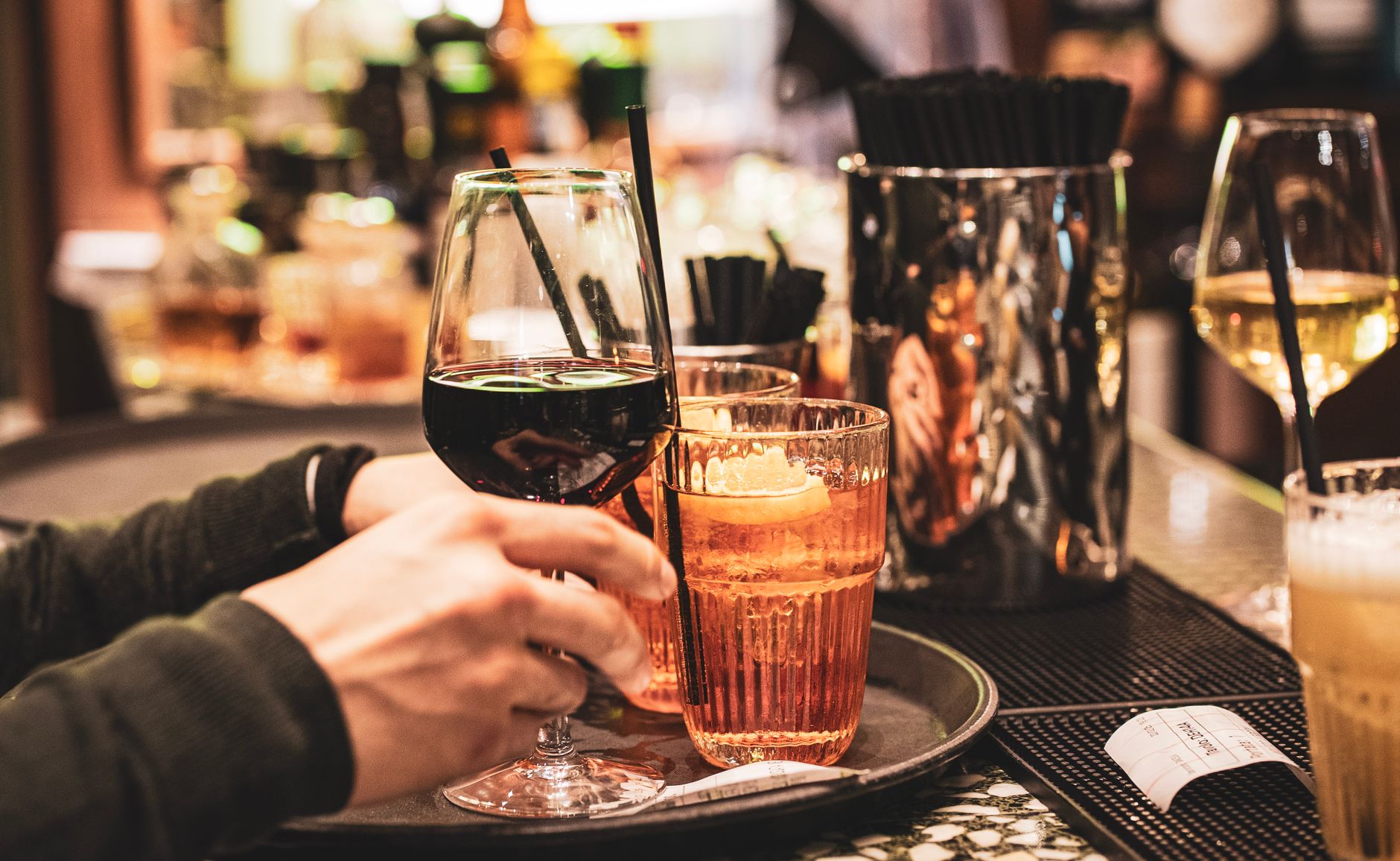
The apericena — an aperitivo whose buffet doubles as dinner — is the other student standby, but be honest about the price. At Caffè Zamboni (Via Zamboni 6/B), the buffet runs roughly 18:00–21:00 and a drink with buffet access costs around €10–15, according to the Do Eat Better Experience food guide for Via Zamboni; Zero.eu lists the venue as open daily from 07:00. That is dinner-priced, not free. Treat it as a meal replacement, not a cheap drink.
What actually eats your Bologna budget
If the museums and the porticoes are free, your money goes almost entirely into one line: rent. That is the thing worth optimising, and the thing most students get wrong in their first September, when panic and a deadline meet a landlord asking for a large caparra (deposit) in cash.
Two habits pay off. Know the going rate before you negotiate — our Italy rental prices analysis for 2026 and the student cost-of-living budget breakdown exist for exactly that. And squeeze the discounts you are already entitled to, which is what the guide to student discounts in Italy covers.
For the room itself, Coinquilino (coinquilino.app), a free app for finding rooms and roommates in Italy, is one option among several — full disclosure: Coinquilino is our app. Whichever platform you use, never send a deposit before you have seen the room and met the person holding the keys.
Are Bologna museums free on the first Sunday of the month?
Partly, and this is the trap. Under the national #domenicalmuseo scheme, state museums in Bologna (such as the Pinacoteca Nazionale) open free on the first Sunday of most months — the 2026 dates listed by MuseidiBologna.it are 4 Jan, 1 Feb, 1 Mar, 5 Apr, 3 May, 7 Jun, 5 Jul, 2 Aug, 6 Sep, 4 Oct, 1 Nov and 6 Dec. But the city's own civic museums, including MAMbo and the Museo Civico Medievale, do not currently take part, despite having done so in the past. Check whether your target museum is state-run or civic before you plan the day around it.
Is walking the San Luca portico hard?
It is a steady climb with 489 steps along the way, per Geopop's 2026 figures, so it is a real walk rather than a stroll. Anyone reasonably mobile can do it in around an hour going up. The full cover overhead means you can attempt it in rain, which is more than can be said for most Bologna outdoor plans in winter.
Do I need a student ID for the free museums in Bologna?
Not for the ten museums listed as free all year by MuseidiBologna.it — no ticket and no ID are required there. Carry your university card anyway. Plenty of other Bologna venues, transport passes and cinemas run student rates, and you cannot claim one retroactively at the till.
Can I really bring my own food into a bar in Italy?
Almost nowhere — Osteria del Sole is the celebrated exception, and it works because the place has served only wine since 1465, per its own site. Do not try this anywhere else; you will be asked to leave. Buy from the Quadrilatero stalls a few streets away and carry it in.
What is the cheapest way to spend a whole Saturday in Bologna?
Morning in the Quadrilatero for food shopping, lunch on the grass at Giardini Margherita, afternoon at one of the always-free museums or the centre walking loop, San Luca at golden hour, evening in Piazza Verdi. Total outlay: groceries. That is a full, genuinely good day in one of Italy's best student cities for the cost of a supermarket run.
Is Bologna expensive for students overall?
Culture and public space in Bologna are unusually generous for free — a UNESCO-listed portico you walk into without a ticket, a 26-hectare park open at all hours, ten permanently free museums. Housing is where the pressure sits, and it is the number that decides whether your year is comfortable or tight. Fix the rent first; the free city is waiting either way.
---
This article was produced with the help of AI tools and reviewed by the Coinquilino editorial team.