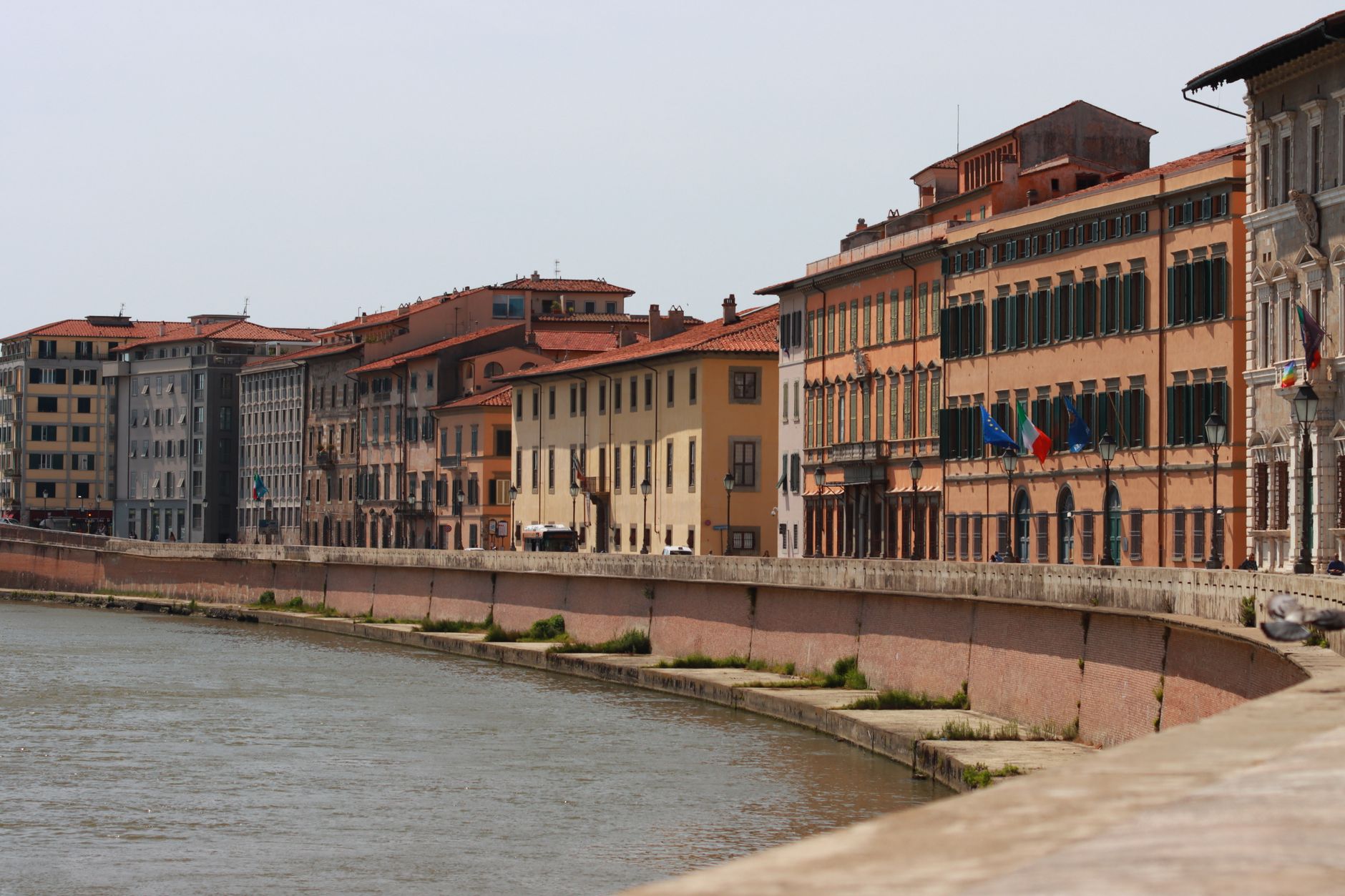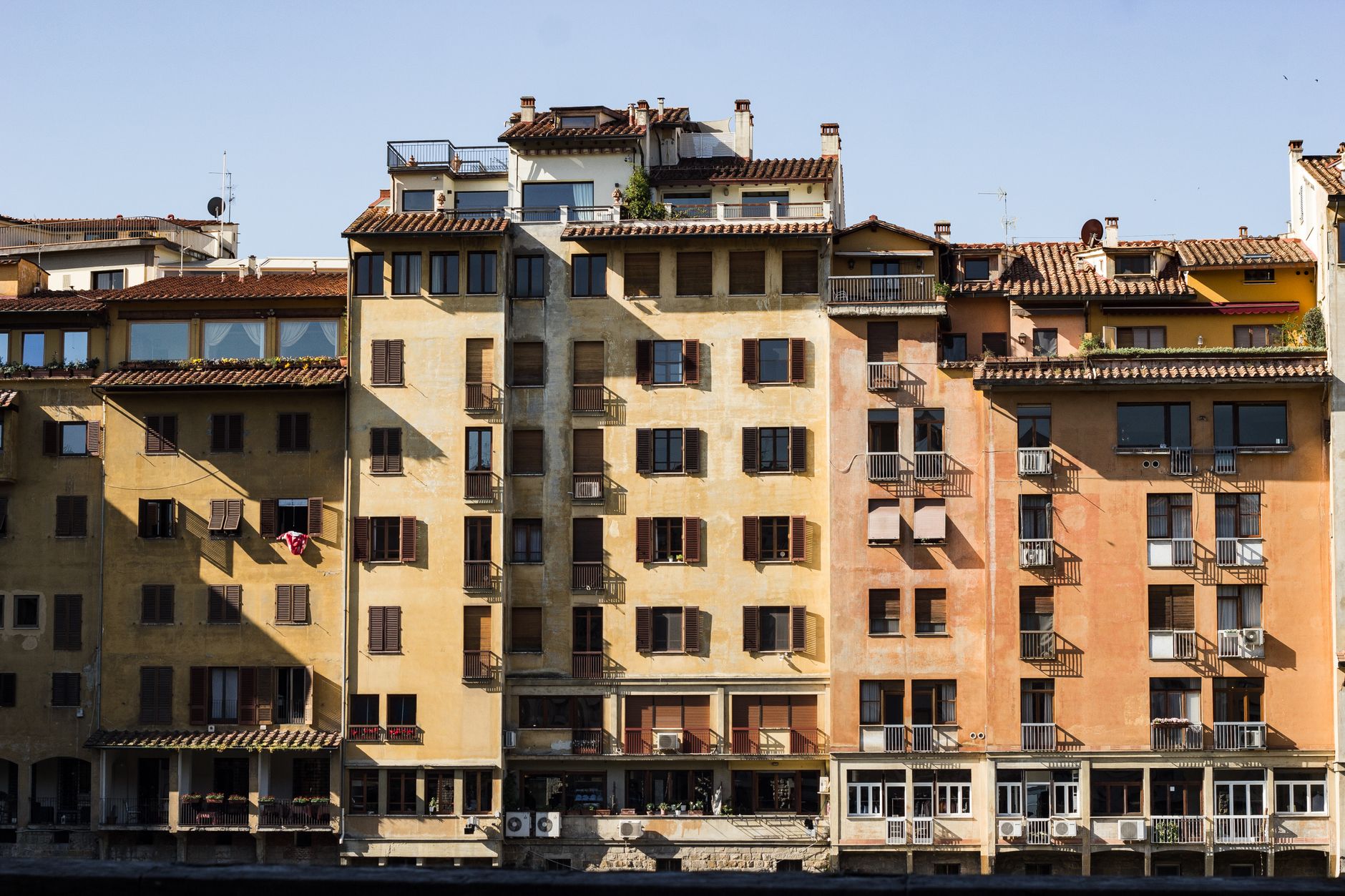
Here is what those five listings actually look like in Florence, and how to check one in under an hour.
Why do rental scams in Florence spike at the start of term?
Florence runs on a housing shortage. Immobiliare.it Insights, reported by La Nazione in December 2024, forecast average asking rents of €22 per square metre per month in Florence for 2025 — up 5.3% year on year and second only to Milan's €24/m². That was a forecast, not confirmed actuals, but the direction is not in dispute.
Matteo Ranchetti, who directs the Florence and Abroad rental agency on Via San Zanobi, told La Nazione on 8 October 2025 that the short-term holiday-rental boom keeps pulling apartments out of the long-term market.
Scarcity is what makes the scam profitable. When ten students chase one room, hesitating feels expensive, and "three other people are interested, send the caparra (deposit) today" stops sounding absurd.
In the same article, SoloAffitti CEO Silvia Spronelli said scam complaints had risen roughly 20% over two years, clustering at the start of academic semesters, with first-year students the most exposed group. That 20% is an Italy-wide figure. No Florence-only scam count is published — be suspicious of anyone who quotes you one.
Scam #1: the room priced far below Florence's €350 average

📷 www.kaboompics.com / Pexels
A single room in Florence averages €350 a month per the SoloAffitti data cited by Skuola.net in 2025, with real listings running roughly €300–€550 depending on zone and room type.
So a bright double inside the historic centre advertised at little more than half that average, bills included, is not a bargain. Skuola.net documents this as classic advance-deposit fraud: stolen photos, a below-market price, pressure to pay before any viewing, then silence.
The Polizia di Stato's advice, published by the Questura di Firenze on 12 July 2024, puts "distrust prices far below market" and "never pay before seeing the property" at the top of its checklist.
Price anchoring is your cheapest defence. Skim Italian rent trends and 2026 forecasts before you message anyone, so a fake number looks wrong instantly.
One legal anchor helps too. Legge 392/1978, art. 11, as summarised by Immobiliare.it, caps a residential security deposit (cauzione, informally caparra) at three months' rent, returnable at the end of the contract with legal interest accrued annually. Someone demanding six months up front has already told you what they are.
Scam #2: the "ghost landlord" who wants a transfer before a viewing
📷 SplitShire / Pexels
Skuola.net names this pattern explicitly: a landlord conveniently abroad — working in London, a family emergency in Germany — who cannot show the apartment but will post the keys once the money lands.
There is always a story explaining why a viewing is impossible, and there is always a wire transfer.
The Questura di Firenze advisory warns specifically about requests for prepaid-card top-ups and foreign IBANs (IBAN estero, a non-Italian bank account) for what is supposedly a local Florence property. A Florence landlord with a Florence apartment does not collect rent through a foreign prepaid card.
Real paperwork also arrives in the right order. A landlord needs your codice fiscale (the Italian tax code required for contracts, bank accounts and utilities) at signing, and non-EU students will need their permesso di soggiorno (residence permit) or the receipt proving it was applied for. None of that is requested before you have stood in the room.
If you cannot reach Florence before term starts, insist on a live video call you initiate, where the person opens the street door, then the apartment door, and says today's date out loud. A scammer with stolen photos cannot do it.
Scam #3: the agency that sells you a list of apartments
The third pattern Skuola.net documents is the fake agency or "database": you pay a fee — membership, a curated list, "priority access" — and receive addresses of apartments already rented, or that never existed.
The tell is that you are paying for information rather than for a service attached to a signed contract. Legitimate Florence agencies earn a commission when a lease is actually signed.
Geography is the second filter. Idealista News mapped Florence's five student zones on 2 October 2025: Novoli (Economics, Political Science and Law, tram-connected), Rifredi (Medicine and Engineering, near Careggi hospital), Santa Maria Novella (by the main station), Duomo–San Marco (humanities, central and pricier), and Sesto Fiorentino (the Scientific Pole — Chemistry, Physics, Engineering, Agronomy).
A "student list" scattered across places with no faculty, no tram and no train line was assembled by someone who has never lived here.
Before paying any agency a euro, ask for its partita IVA (VAT number) and the address of its office, then go to the office.
Scam #4: why would a real landlord move you off the platform?
Almost every Florence scam shares one hinge moment: the conversation leaves the platform where the listing lives and continues on private email or a personal WhatsApp number.
That move is not about convenience. It deletes the reporting button, the message history and any account the platform could suspend.
The Questura di Firenze's fourteen-point checklist, published 12 July 2024, names it directly — avoid being pulled off official platforms into private email, and use only certified, traceable payment intermediaries. The full Polizia di Stato advisory is public.
The scale behind that advice is national rather than local: the same advisory cites more than 16,000 online fraud cases handled in Italy in 2023, up 6% on 2022, worth roughly €137 million.
Keep the thread where it started until you have seen the apartment. If someone insists on moving it, you already have your answer.
Scam #5: is an unregistered Florence rental a scam?
Not fraud in the same sense — you may genuinely get the room. But an affitto in nero (an undeclared, unregistered rental) leaves you with no protection at all, and it is the version Erasmus students fall into most often, because the apartment is real and the landlord is standing in front of them.
The Agenzia delle Entrate requires a lease to be registered within 30 days of signing, or of the start date if that comes first, and landlord and tenant are jointly liable for the registration taxes. Registration is done online through the RLI web service; the rules are on the official Agenzia delle Entrate page.
Without registration you have no ordinary route to reclaim your deposit, you cannot register your address (residenza), and rent tax relief is closed to you.
Ask two questions before signing. Which contract type is this — student lets often use a contratto transitorio, a short-term transitional lease for temporary stays — and will the landlord opt for cedolare secca, the flat-rate rental tax regime chosen instead of ordinary taxation?
A shrug to both means the lease is not going to be registered. Our guide to Italian rental contract types explains what each one protects.
How do you verify a Florence listing before you pay anything?
Work in this order and all five patterns collapse before they cost you money.
Reverse-image-search the photos first. Stolen images are the shared ingredient in the advance-deposit fraud Skuola.net describes, and a match on a hotel page or a listing in another city ends the conversation in minutes.
See the apartment — in person, or on a live video call you start. The Polizia di Stato advice published by the Questura di Firenze is blunt about never sending money before seeing the property.
Pay traceably, and only after signing: bank transfer to an Italian IBAN in the name on the contract. Never a prepaid-card top-up, never cash for a "reservation".
Then confirm the contract is registered inside the 30-day window the Agenzia delle Entrate sets.
Where you search shapes the risk. Platforms with real profiles, message history and a reporting flow make the off-platform pivot obvious; Coinquilino (coinquilino.app), a free app for finding rooms and roommates in Italy, is one of them (full disclosure: Coinquilino is our app). Open Facebook groups and anonymous classifieds are not built for it, which is exactly where these listings breed.
And before you hand over any deposit, learn the rules for getting it back — how the Italian rental deposit actually works.
Florence rental scams: quick answers
Is €350 a month realistic for a room in Florence?
Yes. €350 is the single-room average per SoloAffitti data cited by Skuola.net in 2025 and repeated by La Nazione on 8 October 2025, with real listings roughly €300–€550 depending on zone and room type. Well below that range in the historic centre, treat the listing as unverified until you have physically seen it.
I already sent a deposit to a fake landlord. What can I do?
Call your bank immediately and ask about recalling the transfer — hours matter more than anything else you do. Then file a report (denuncia) with the Polizia Postale, the unit handling online fraud, or at the Questura. Save every message, screenshot, IBAN and phone number first; without them there is nothing to investigate.
How much deposit can a Florence landlord legally ask for?
Legge 392/1978, art. 11, as summarised by Immobiliare.it, caps the cauzione at three months' rent for residential leases, returnable at the end of the contract with legal interest accrued annually. A demand for more is not a local Florentine custom — it is a warning.
Do I need a codice fiscale before I start looking for a room?
Not to search or to view apartments. You do need it to sign a registered lease, open an Italian bank account and set up utilities, so request it early. Waiting until a landlord asks is how people lose rooms they had already agreed on.
Is a contratto transitorio safe for an Erasmus student?
Yes, when it is registered. The contratto transitorio is a legitimate short-term lease type built for temporary stays, and it goes to the Agenzia delle Entrate within 30 days like any other contract. The risk is never the contract type — it is a landlord who offers no written contract at all.
Are Florence agencies safer than private listings?
An agency with a verifiable partita IVA, a physical office you can walk into and a commission paid only on signature is a reasonable filter. An "agency" that charges up front for a list of addresses is the exact pattern Skuola.net documents as fraud. The label means nothing; the payment structure means everything.
Every scam in this list needs one thing from you: money moving before your eyes have been in the room. Hold that line and the €350 average becomes a number you can shop against, not a story someone tells you on WhatsApp.
---
This article was produced with the help of AI tools and reviewed by the Coinquilino editorial team.