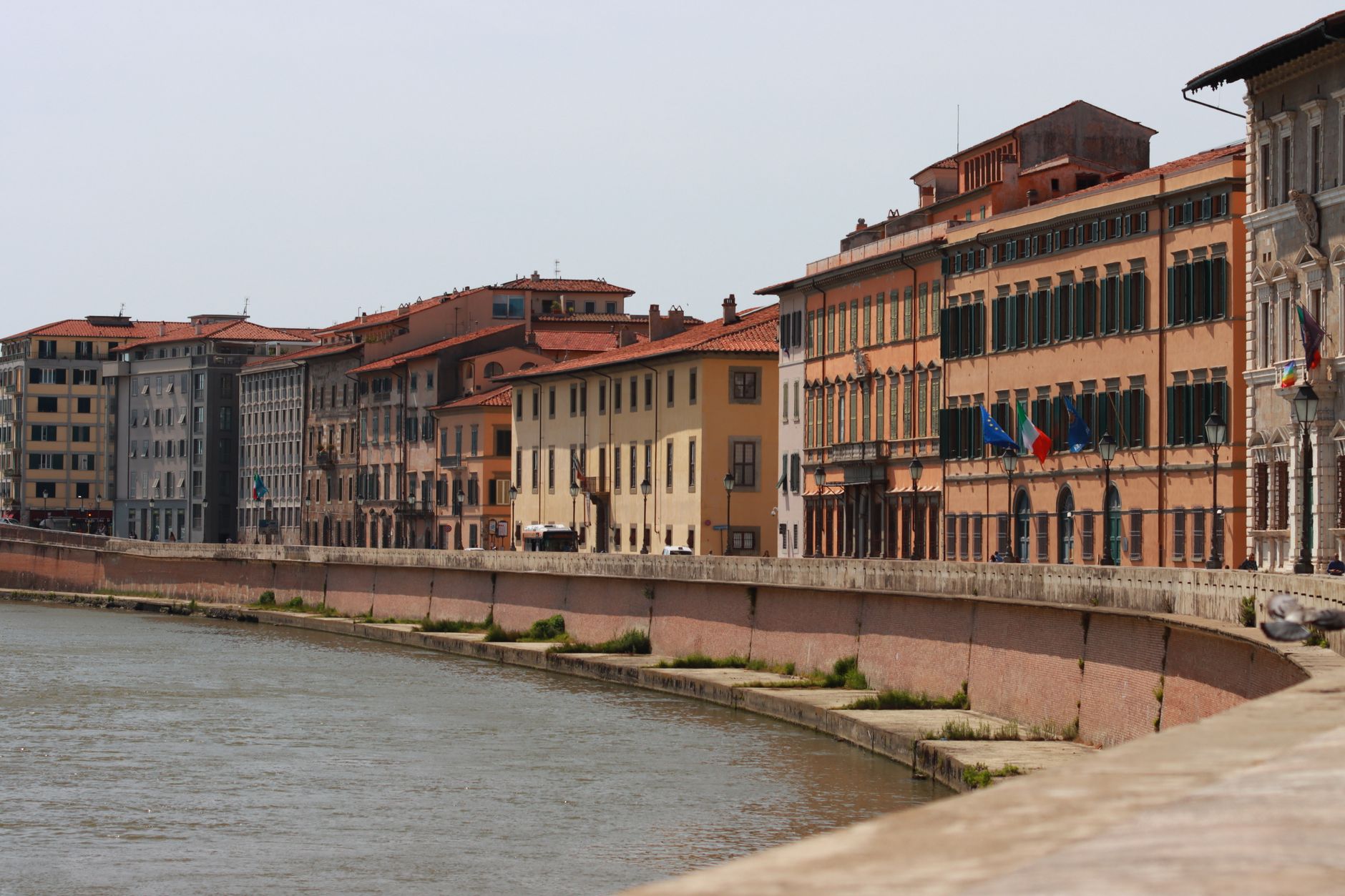
Milan is the biggest Erasmus and expat market in Italy, and September is when both the demand and the fraud arrive together. The scripts below are documented in Italian press, police guidance, and student accounts — not hypotheticals. Learn the shape of each one and you can throw out a bad listing before you reply to it.
Why are rental scams in Milan getting worse every semester?
Because the market itself is tight enough to make bad judgement feel rational. Skuola.net's October 2025 report put the average student room in Milan at €675/month, against €620/month in Rome — the highest pressure in the country.
BusinessOnline.it, in an August 2025 breakdown, listed shared single rooms in Milan at €500-800/month, studio apartments at €700-1,000/month, and university dorm places at €300-400/month. The same source noted that Città Studi (the Politecnico area) and Navigli command above-average rents, while Bicocca, Lambrate, Loreto and Bovisa run lower.
A 2026 Uniplaces guide put Bicocca single rooms at €450-650/month and Navigli singles at €700-900/month, with double rooms city-wide at €400-600/month. Read those ranges as your fraud filter. A renovated single in Navigli advertised well under the Bicocca range, bills included, is not a bargain — it is a fabrication, built precisely because you want it to be real.
If you are still mapping the city, our guide to the smart Milan neighborhoods and the ones to avoid covers where those numbers actually come from.
Fake listing 1: why does the deposit come before the viewing?

📷 https://kaboompics.com/ / Pexels
This is the oldest script and still the most common. A 2016 VICE Italia investigation into Milan rental fraud documented fake landlords posting on casa.it under invented identities — names like "Caterina Angioi" and "Giorgia Bonaiuti" — who demanded a security deposit before anyone saw the property.
In one documented case from that investigation, the demand was two months' rent as a deposit: €1,400 on a €700/month room. A 22-year-old victim lost exactly that amount. VICE reported that foreign families, notably South American ones, were specific targets, pressured with invented urgency about other tenants ready to sign that evening.
The reason the script survives is that it sounds procedural. "The deposit confirms the booking, then we hand over the keys." No legitimate Milan landlord needs money to let you stand in a room. Manufactured urgency and a pre-viewing payment together are not two red flags — they are one scam with two halves.
Fake listing 2: is that "Airbnb trial stay" really Airbnb?
📷 SplitShire / Pexels
The upgraded version wraps the same demand in a brand. The VICE Italia investigation also documented fraudsters falsely claiming Airbnb affiliation, presenting the payment as a protected "trial stay" — you pay the platform, you try the flat, you get refunded if you dislike it.
None of it exists. The money leaves your account through a normal transfer while the story about escrow, insurance, or a "platform guarantee" is delivered over WhatsApp or email. Any real booking platform keeps payments inside its own checkout; the moment a conversation moves off-platform to arrange money, the guarantee moves with it — into nothing.
The rule is blunt and it costs you nothing: if someone invokes a platform's protection, complete the payment on that platform or do not pay. Screenshots of a dashboard, PDF "confirmations," and logos in an email signature are trivially faked. A payment made outside a platform is never covered by that platform, regardless of what the message says.
Fake listing 3: the phantom landlord and the lawyer who signs nothing
RentalMilan.com published a first-person account (undated) of two Portuguese Erasmus students hunting for a Milan apartment three months before arrival. They found an attractively priced two-bedroom flat, and a person presented as a lawyer was involved in the paperwork, which made everything feel institutional. After they wired the deposit and the first month's rent, the landlord stopped replying.
The distance is the weapon. Booking from Lisbon, Istanbul or São Paulo three months out means you cannot knock on the door, and everyone involved knows it. A third party — lawyer, agent, "property manager," relative — exists to absorb the doubt you would otherwise direct at the landlord.
A contratto di locazione (lease contract) signed by someone whose identity you have not independently verified is a PDF, not protection. Before any transfer, ask for the owner's full name and request a visura catastale, the land-registry ownership check that confirms who actually owns the unit. A real landlord finds this boring. A fake one finds a reason to skip it.
Fake listing 4: is a 12-month advance payment even legal in Italy?
No, and the useful part is that the legal ceiling gives you a hard number to test any demand against. LaLeggePerTutti.it notes that under Article 11 of Law 392/1978, the security deposit — the caparra or deposito cauzionale — cannot legally exceed three months' rent.
Milan produces real examples well past that line. Newsmondo.it reported in October 2024 on a listing near Città Studi, in the Politecnico area, asking 12 months' rent in advance plus 3 months' deposit on a €1,800/month apartment — roughly €27,000 upfront. The listing went viral after the "Signor Distruggere" account shared it, which tells you how far outside the norm it sat.
Some of these listings are not scams in the criminal sense; they are real owners filtering for wealthy families. It makes no practical difference to you. Anything above three months' deposit is either unlawful or a fishing expedition, and both deserve the same answer. Our breakdown of how to get every euro of your deposit back under the 2026 law covers what a compliant deposit looks like from signature to move-out.
Fake listing 5: the contract nobody registers
The most damaging fake is the one where the room, the landlord and the keys are all real — and the contract is not. Skuola.net's October 2025 reporting found that roughly 5% of reported student rental cases involved unregistered or irregular contracts, including terms like unlimited landlord inspection rights and unitemized flat fees.
Registration is not optional. The Agenzia delle Entrate, Italy's tax authority, requires a residential lease to be registered within 30 days of signing or of the effective start date, whichever comes first, whenever the lease runs more than 30 cumulative days a year — and both tenant and landlord are jointly liable for it. An unregistered contract cannot support your residency application, and it leaves you without a paper trail when the deposit disappears.
Two details protect you. LaLeggePerTutti.it notes that registration tax and stamp duty are split 50/50 between landlord and tenant under Article 8 of Law 392/1978, so anyone asking you to cover the full "registration fee" — or an inflated version of it — is signalling something. And cedolare secca, the flat-tax regime available on residential leases, is normal and not a red flag: the contract still gets registered. Choosing between a contratto transitorio, the short-term type often used for students, and a standard lease? Compare them in our guide to Italian rental contract types.
How do you check a Milan listing before you pay anything?
Italy's Polizia Postale, the state police unit handling online fraud, publishes concrete guidance on the Polizia di Stato site. Three rules from it, in order of usefulness.
First, a deposit should never exceed 20% of the total before you have verified the listing. Second, pay only through traceable methods — an Italian IBAN starting with "IT", PayPal, or Hype by Banca Sella — and never through prepaid cards or international money transfer services, which are designed to be irreversible. Third, run the listing photos through a reverse image search and cross-check the address on Google Maps satellite view before any payment leaves your account.
Add a fourth of your own: a live video call from inside the room, where you ask the person to walk to the window and show the street. Recycled photos survive a chat conversation; they do not survive that request.
Where you search shapes how many of these listings you see. Portals with open, unverified posting carry the most fakes — the VICE Italia case sat on a mainstream real-estate portal. Coinquilino (coinquilino.app), a free app for finding rooms and roommates in Italy, keeps the conversation and the profile in one place with identity verification, which removes the anonymous-email step most of these scripts depend on. Full disclosure: Coinquilino is our app, and no platform makes the checks above unnecessary.
What is the maximum deposit a landlord in Milan can legally ask for?
Three months' rent. LaLeggePerTutti.it points to Article 11 of Law 392/1978 as the ceiling for the caparra or deposito cauzionale on residential leases. A demand for more than that is your cue to stop, not to negotiate.
Can I safely sign a Milan lease before I arrive in Italy?
You can sign remotely, but you should never pay remotely on trust alone. The RentalMilan.com account of two Portuguese Erasmus students losing a deposit and first month's rent describes exactly the three-months-ahead remote booking that goes wrong. Verify ownership, run a live video walkthrough, and pay only by traceable Italian IBAN as the Polizia Postale advises.
Do I need a codice fiscale to sign a rental contract?
Yes — the codice fiscale, Italy's tax identification code, appears on the registered contract for both parties. A landlord who says the contract can be registered without yours is either mistaken or planning not to register it at all. Getting the code is free and available to non-residents.
What if I need the contract for my permesso di soggiorno?
Then the registration point matters more for you than for anyone else. A permesso di soggiorno application, the Italian residence permit for non-EU nationals, needs proof of an address that stands up to checks, and an unregistered lease does not. Ask for the registration receipt from the Agenzia delle Entrate, not a promise that it is coming.
I already sent the money. What now?
Act the same day. File a formal complaint — a denuncia — with the Polizia Postale, contact your bank immediately to attempt a recall on the transfer, and keep every message, listing screenshot and payment receipt. Recovery odds are poor with irreversible payment methods, which is exactly why the police guidance puts traceable payments first.
Are rental scams in Milan worse than in other Italian cities?
Milan carries the largest international student population, anchored by Bocconi and the Politecnico di Milano, and the highest student rents in the Skuola.net 2025 comparison at €675/month against Rome's €620. More demand, more money moving, more fraud attempts. The scripts are national; the volume is Milanese.
The five fakes above share one structural weakness: every single one needs you to move money before you have verified a person, an address, or a document. Hold that line and the scripts stop working — not because you outsmarted anyone, but because there is nothing left for them to do.
---
This article was produced with the help of AI tools and reviewed by the Coinquilino editorial team.