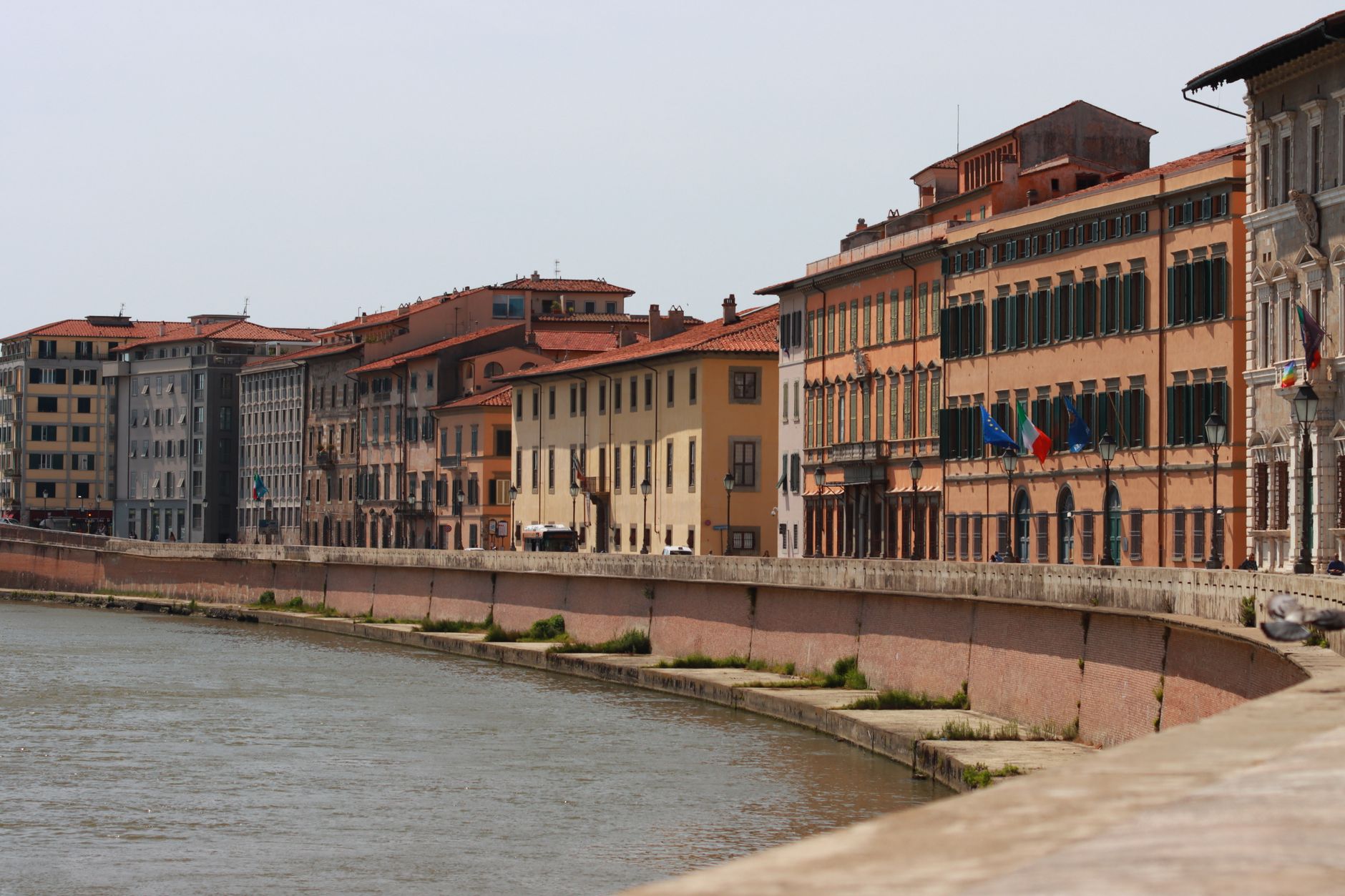
Why are rental scams in Venice worse than in other Italian cities?
Because the shortage is structural, and scammers price their bait against desperation, not against the market. VEZ reported in 2023, citing ESU Venezia representative Angelica Morresi, that the regional student-housing body has just over 2.000 subsidised beds for roughly 100.000 students in the metropolitan area. Nothing about that ratio has improved.
Prices moved the wrong way at the same time. Immobiliare.it Insights data reported by VeneziaToday in September 2025 put the average across the whole comune at 15,56 €/mq, against 14,26 €/mq a year earlier, with the centro storico averaging over 22 €/mq and peaks above 25–26 €/mq. Mestre and the terraferma (the mainland) absorb the students who lose the island lottery.
Add an Erasmus arrival date you cannot move, and you get a buyer who will wire money to a stranger. That is exactly the profile fake listings are written for. If you want the national picture before you judge a Venice price, our breakdown of Italian rental prices in 2026 is the reference point.
Fake listing #1: the centro storico room priced like Mestre

📷 https://kaboompics.com/ / Pexels
The single most reliable tell is the price itself. Liveuniversity documented the Italian student-housing scam pattern in June 2026: ghost listings are typically advertised around 40% below the local market, using stolen photos lifted from hotels or foreign real-estate sites.
Learn the real floor so the bait looks absurd. Room listings on Idealista and Casa.it for Venice and its province in 2025 ranged from beds and shared rooms for students from €195, a single furnished room at €250, single rooms in Mestre centro at €370–€500, and a single room in Cannaregio, inside the historic center, at €670 per month.
Against that, a furnished single in San Marco with a canal view at €350 all-inclusive does not exist. Neither does the "my daughter just left, I only want a serious tenant" version of it. Price too good for the sestiere is not a bargain to move fast on — it is the filter the scammer uses to find people who move fast.
Fake listing #2: is a landlord who "can't show you the flat" ever real?
📷 SplitShire / Pexels
Occasionally, yes. But the excuse is also the backbone of the ghost-room scam, which per Liveuniversity's June 2026 write-up runs on a poster who claims to be abroad, cannot show the property, and pushes prepayment by bank transfer or prepaid card before any visit.
Venice gives you a verification tool other cities do not. Addresses here are a sestiere plus a civic number — "Cannaregio 2418", not a street and house number — and the numbering runs across an entire sestiere. A real landlord can give you the exact civico, the nearest campo, and the vaporetto stop without hesitating.
Ask for a live video call, not a recorded clip, and ask them to walk to the window and show you what is outside. Ask them to hold up today's date. Scammers running dozens of listings do not have the property to walk through, and they drop off fast when the request is specific.
Fake listing #3: the tourist apartment dressed up as a student room
This is the Venice-specific one, and it is documented. Gruppo TV7 reported in August 2024 that 28 of the 480 beds at the Ca' Foscari/Camplus student residence in Santa Marta were being let to tourists through Airbnb for up to €150 a night; the Guardia di Finanza and local police found no SCIA (the business start notice) and no Veneto Region CIN, the national ID code now mandatory for short-term rentals, and issued two fines totalling €4.000.
If a residence can be quietly converted, a private flat certainly can. The version aimed at you looks like a normal room until spring, when you are asked to leave "for renovations" right as the tourist season pays four times better.
Protect yourself at the contract stage. A student stay should be a proper contratto di locazione — often a contratto transitorio, the short-term contract type used for students and temporary workers — not a hospitality booking with a check-out date. Our guide to Italian rental contract types explains which one actually protects a foreign tenant.
Fake listing #4: why should you never send a caparra by bank transfer?
Because the Italian police say so directly. The Polizia di Stato's official advisory on renting safely tells renters not to send a caparra by bonifico on request alone, to verify the ad and the landlord first, and to pay only through traceable methods such as an Italian IBAN starting with IT, PayPal, or another verifiable service.
Read the payment instruction as the diagnosis. A foreign IBAN for a Venice flat, a prepaid card, a money-transfer service, or a "friend's account" are all the same answer: the money is not recoverable and there was never a room.
Know the ceiling too. For canone concordato (rent-controlled) contracts, the deposit is capped at three months' rent under the ministerial decrees implementing Law 431/1998; for free-market contracts the amount is negotiated. Anyone demanding six months up front is either scamming you or overreaching — and either way, our guide on getting your deposit back in Italy is worth reading before you hand anything over.
Fake listing #5: the room with no registered contract
An unregistered room is a scam with a slower fuse. The Agenzia delle Entrate requires every rental contract longer than 30 days to be registered — within 30 days of signing, or of the start date if earlier, through the RLI procedure; only stays under 30 total days a year with the same party are exempt.
Without registration you have no legally usable proof of where you live. No residenza, no address for the permesso di soggiorno (the residence permit non-EU students must hold), no rent tax deduction, and no standing if the landlord keeps the deposit. You will need your codice fiscale (the Italian tax code) to sign and register anything, so get it before you start viewing.
This is not a fringe problem. VEZ quoted IUAV Student Senate President Lucrezia Ludovici in 2023 describing the Venice search as happening "nella giungla dei gruppi Facebook" — in the jungle of Facebook groups — full of "truffe e contratti in nero", scams and off-the-books contracts. A legitimate landlord who opts for cedolare secca, the flat-tax regime on rental income, still registers the contract. Registration is the honest landlord's normal admin, not a favour.
How do you check a Venice listing is real before you pay?
Run five checks, in this order, and stop at the first failure.
One: reverse image search the photos. Hotel and foreign-portal images are the most common source of stolen listing pictures in the pattern Liveuniversity described in 2026. Two: ask for the sestiere and civico, then find it on a map yourself. Three: insist on a live video walkthrough or a visit by someone you trust in Venice.
Four: see the contract, with the landlord's codice fiscale on it, before any money moves — and pay only by traceable method, as the Polizia di Stato advises. Five: prefer channels where the counterparty has something to lose. The Study in Venice student housing platform, run jointly by the Comune di Venezia, Città Metropolitana, Ca' Foscari and IUAV, lists vetted rooms at €300–500 a month and full apartments at €500–1.800 across the centro storico, Giudecca, Lido and Mestre.
For the private market, use apps with real profiles and in-app messaging instead of open Facebook groups, so a scammer cannot vanish with one deleted post. Coinquilino (coinquilino.app), a free app for finding rooms and roommates in Italy, is one of those channels — full disclosure: Coinquilino is our app.
Is it normal to pay a deposit before seeing a room in Venice?
No. The Polizia di Stato's advisory is explicit that a caparra should not be sent by bank transfer on request alone, before the ad and the landlord have been verified. Demand for money before any viewing or video verification is the single most common scam step, not a Venice custom.
What does CIN mean on a Venice listing, and should I care?
CIN is the Codice Identificativo Nazionale, the national ID code required for short-term rentals in Italy. Its absence was one of the findings in the August 2024 Ca' Foscari residence case reported by Gruppo TV7. If a "student room" is advertised with short-let signals and no contract, you are being sold a tourist stay that ends when high season starts.
How much does a real student room in Venice actually cost?
On the private market in 2025, Idealista and Casa.it listings for Venice and province ran from €195 for shared student beds up to €670 a month for a single room in Cannaregio, with Mestre centro singles around €370–€500. Through the Comune-backed Study in Venice platform, rooms are listed at €300–500 a month. Anything far under those, in the centro storico, deserves suspicion rather than speed.
Can I use the address for my residenza and permesso di soggiorno?
Only if the contract is registered with the Agenzia delle Entrate, which the law requires for any rental over 30 days. An off-the-books room gives you nowhere to declare, which is why the "contratti in nero" that IUAV students described in 2023 cost more than money.
I already sent money and the landlord disappeared. What now?
Contact your bank immediately and ask whether the transfer can be recalled, then file a denuncia with the Polizia Postale, keeping every message, listing screenshot and payment receipt. Report the listing to the platform that hosted it too. Recovery is not guaranteed, but an unreported scam keeps running against the next arrival.
---
This article was produced with the help of AI tools and reviewed by the Coinquilino editorial team.