Why do LA roommates split rent instead of renting solo?
Because the math forces it. Citywide, RentCafe put the average LA apartment at $2,756/month in July 2026 (up just 0.06% year-over-year) — more than most single incomes can carry alone.
The pressure shows up in the data. Per USC's Neighborhood Data for Social Change (2023 figures published 2025), 58% of LA County renters spent more than a third of their income on housing, and over 90% of renters earning under $50,000 were cost-burdened. When 63% of LA housing is renter-occupied, the roommate route isn't a lifestyle choice — it's how a two-bedroom becomes payable.
That's why this guide ranks neighborhoods by per-person split cost, not sticker rent. A pricey-looking 2BR split two ways can beat a "cheap" studio you carry alone.
One caveat on the numbers: RentCafe (Yardi Matrix) and Zumper both aggregate active listings, which cover large multifamily buildings well but underrepresent small-landlord and informal share rooms. Real room-share prices usually run $100–$300 lower per person than the 2BR-split math suggests, because older, smaller units dominate the share market. Treat the figures below as ceilings, not floors.
Pico-Union: the cheapest room split in LA?

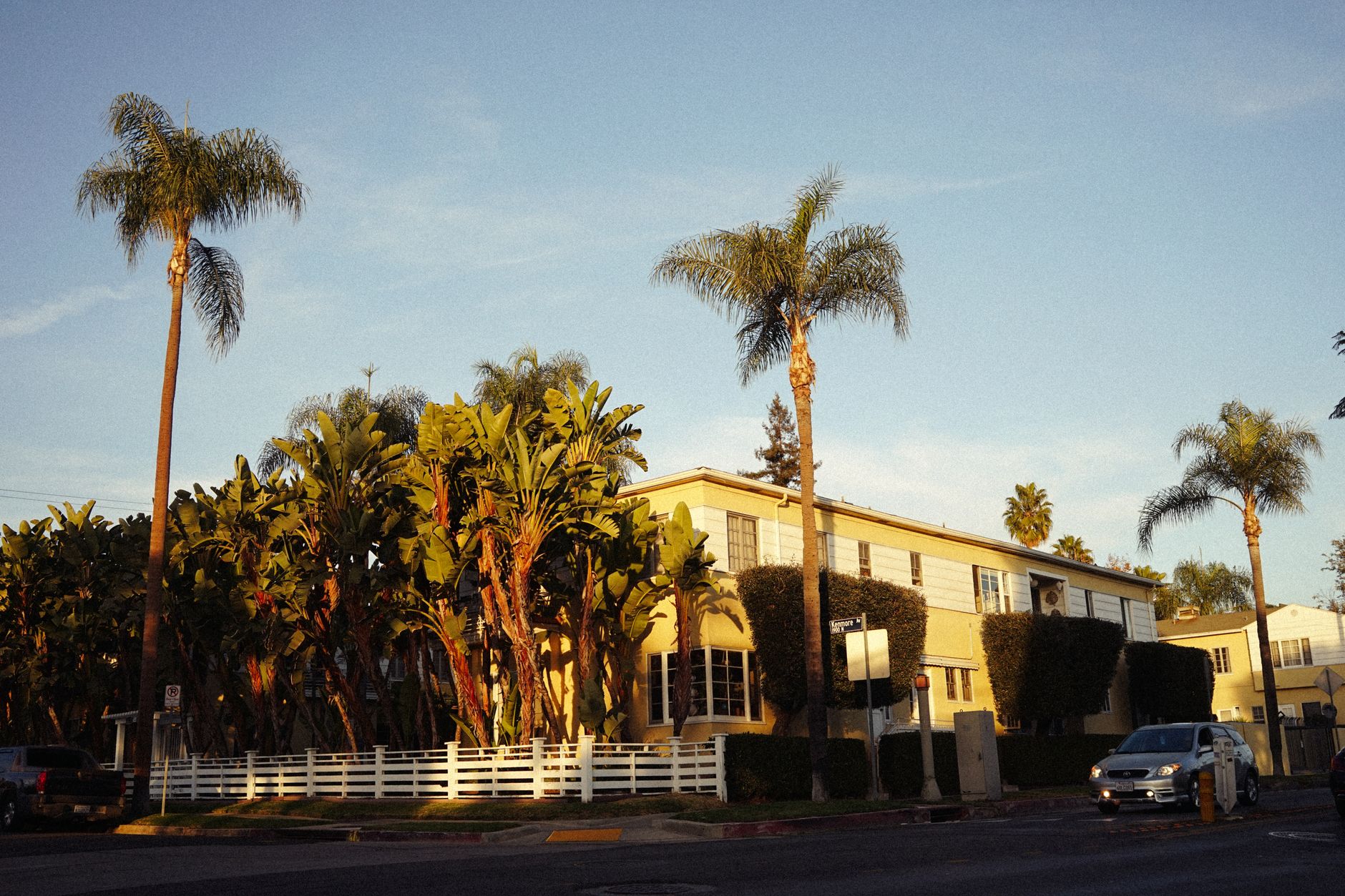
📷 PARTY MALL / Pexels
Close to it. Pico-Union averaged $1,747/month overall in July 2026 — about 10% below the national average — per Zumper. Zumper lists studios at $1,345, 1BRs at $1,716, and 2BRs at $2,395.
Split that 2BR two ways and each roommate pays roughly $1,198/month — the lowest per-person figure among the neighborhoods here (calculated from Zumper's 2BR average). Rent was flat year-over-year and dropped 3% in the last month, and RentCafe ranks Pico-Union among LA's three cheapest neighborhoods.
It sits just west of Downtown, dense and central. The tradeoff is that share listings here often come from small landlords, so expect a careful credit check and a security deposit conversation before you sign the lease. Verify the unit and the person before wiring anything — LA has an active scam market, covered in our LA rental scams 2026 guide.
Van Nuys and Highland Park: which Valley-and-Eastside split wins?
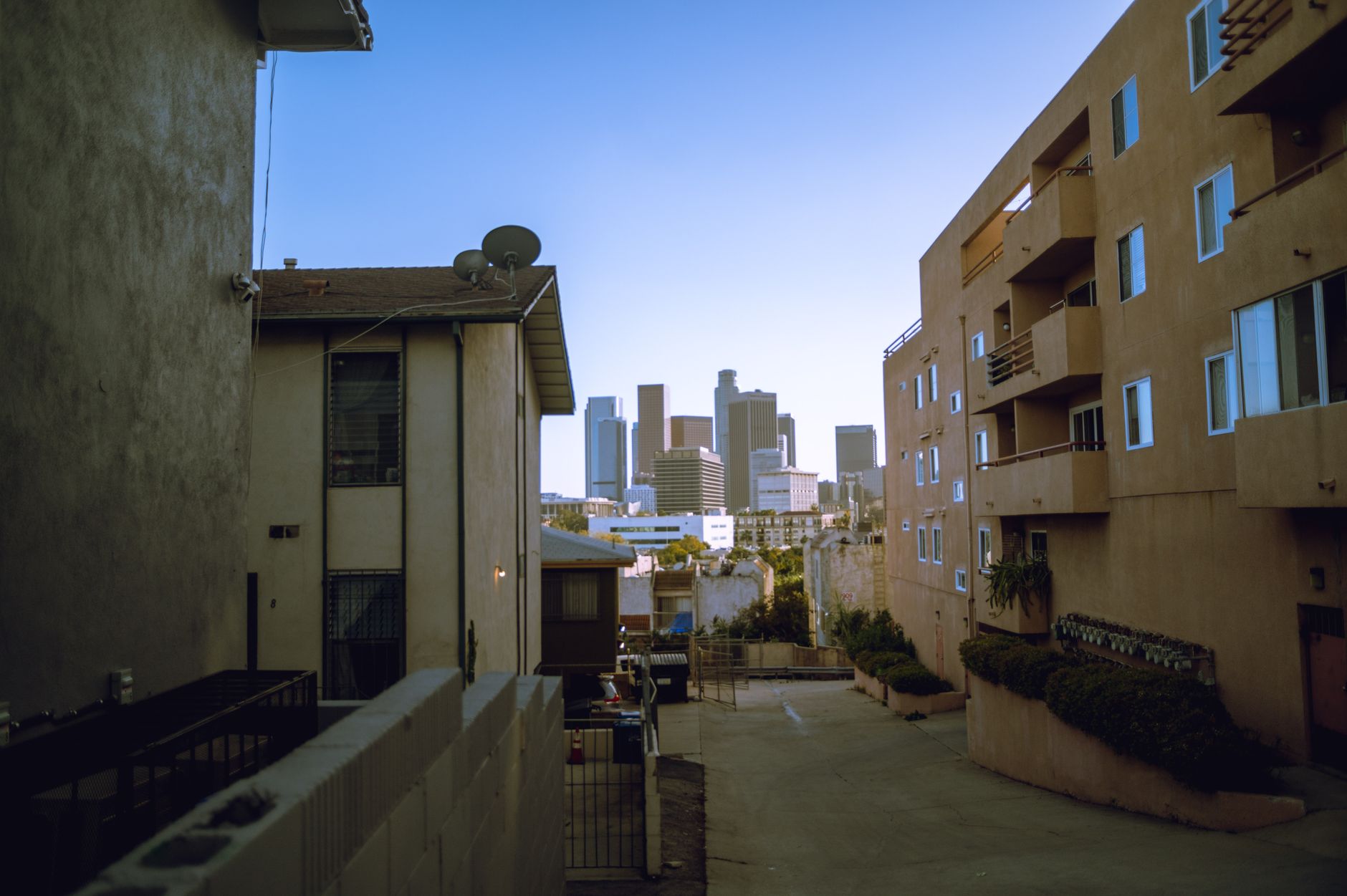
📷 Kevin Charles Macaraeg / Pexels
Both land in the $1,285–$1,302 per-person range, so pick on lifestyle.
Van Nuys, in the San Fernando Valley, averaged $2,110/month overall (739 sq ft) per RentCafe's July 2026 data, with 2BRs at $2,603 — about $1,302 per person split two ways. Rent rose 0.47% year-over-year, and 41% of rentals fall between $1,501 and $2,000. It's roomier and more car-dependent.
Highland Park, on the Eastside, averaged $2,176/month with 2BRs at $2,569 — roughly $1,285 per person. RentCafe's July 2, 2026 data showed rent down 0.08% year-over-year, and 43% of rentals sit in that $1,501–$2,000 band. It's the rare LA neighborhood with rail: the Metro A Line station at N Avenue 57 (open since July 2003) runs through Chinatown to Union Station downtown, per LA Metro records.
Highland Park edges it slightly on price and transit; Van Nuys wins on square footage.
Is Koreatown worth the higher room split?
Often, yes — you're paying for density and transit. Koreatown averaged $2,226/month overall (691 sq ft) per RentCafe's Koreatown data, with studios at $1,729, 1BRs at $2,209, and 2BRs at $3,032. Split that 2BR and each person pays about $1,516 — the priciest share on this list.
What the premium buys: one of LA's most walkable, transit-friendly neighborhoods. Per The LA Local, K-town is served by the Metro B (Red) and D (Purple) subway lines, with stops at Wilshire/Vermont, Wilshire/Normandie, and Wilshire/Western. The D Line added three new westside stations in spring 2026, pushing toward Beverly Hills and LACMA.
If your roommates skip a car and lean on transit, the higher rent can net out lower than a cheaper, car-required neighborhood. Koreatown is also 89% renter-occupied, so share listings are plentiful.
Boyle Heights: still affordable or already too late?
Affordable today, but flag it. Boyle Heights averaged $2,363/month (769 sq ft) in RentCafe's July 2026 data, with 1BRs at $1,836 and 2BRs at $2,391. On paper, a 2BR split lands near $1,196 per person — competitive with Pico-Union.
The caution: rent jumped 8.51% year-over-year, from $2,177 — the sharpest increase among every affordable neighborhood tracked here. That's the difference between a soft market and a heating one. A number that's still low today can move fast, so sign sooner rather than later and confirm what the renewal terms look like before you commit.
One protection helps: if the building predates 2005 and is 15+ years old, California's AB 1482 caps annual increases. For the LA Metro area, the max was 8.0% effective August 2025, rising to 8.7% effective August 2026 (5% plus regional CPI), per California Rent Caps 2025-26.
What LA laws protect roommates before you sign?
Two rules matter most at signing.
Security deposits are capped. Under California's AB 12, effective July 1, 2024, a landlord cannot charge more than one month's rent as a security deposit, per the California Apartment Association. Pet deposits count toward that cap. The one exception: small landlords (a natural person owning two or fewer properties, four or fewer units total) may charge up to two months.
Rent increases are limited. Older LA buildings — those built on or before October 1, 1978 — fall under the city's Rent Stabilization Ordinance (RSO), roughly 624,000 units. The RSO capped annual increases at 3% for July 2025–June 2026; starting July 1, 2026, a new formula sets increases at 90% of CPI, capped between 1% and 4%, per the Apartment Association of Greater Los Angeles. Non-RSO units fall under AB 1482 instead. Ask which rule covers your building before you sign the lease.
How much can roommates save on transit in LA?
Enough to shift the whole calculation. Per LA Metro's official fares, a single ride is $1.75, transfers are free within two hours, and daily fares cap at $5 (pay for three rides, ride free the rest of the day). The weekly cap is $18 — you never pay more.
That's why transit-rich neighborhoods can beat cheaper, car-dependent ones on total cost. In Koreatown or Highland Park, a roommate who drops a car — insurance, gas, parking — frees up hundreds a month that a lower Van Nuys rent won't fully offset if you still need to drive everywhere.
Run the real split before you decide. If you want a repeatable method for dividing rent and shared costs fairly, our Chicago rent-split formula works city-agnostic. And if you're weighing LA against another West Coast market, compare per-person room math in our San Diego rooms guide.
One honest note: to find a room and a roommate, you can list or search for free on Coinquilino — full disclosure, it's our app, a free room and roommate app from Italy, now available in the United States. It's one option among SpareRoom, Facebook groups, and Craigslist, not the market leader here.
What's the cheapest neighborhood to rent a room in LA in 2026?
Pico-Union. Splitting its 2BR (Zumper: $2,395) two ways works out to about $1,198 per person — the lowest per-person figure among the affordable neighborhoods in this guide, and below the citywide median room rent of $1,420 reported by Zumper for July 2026.
Is it cheaper to get a room or a studio in LA?
Usually a room. A Pico-Union studio runs about $1,345/month (Zumper), which one person carries alone. Splitting a 2BR there costs roughly $1,198 per person. In most affordable LA neighborhoods, sharing a two-bedroom beats renting a studio solo.
What is the maximum security deposit a landlord can charge in LA?
One month's rent, under California's AB 12 effective July 1, 2024, per the California Apartment Association. Pet deposits count toward that cap. Small landlords (two or fewer properties, four or fewer units) may charge up to two months.
Which affordable LA neighborhood is rising in price fastest?
Boyle Heights. RentCafe's July 2026 data showed rent up 8.51% year-over-year, from $2,177 to $2,363 — the sharpest increase among the affordable neighborhoods tracked here. It's still relatively cheap, but the trend is heating.
Do LA rent-control laws apply to rooms I share with roommates?
They apply to the unit, not the person. If the building falls under the LA RSO (built on or before October 1, 1978) or AB 1482 (built before 2005 and 15+ years old), the cap governs increases on the whole lease. Ask the landlord which rule covers your building before you sign.
How much do LA roommates spend on transit?
Capped low if they use Metro. LA Metro fares are $1.75 per ride, $5 max per day, and $18 max per week, per Metro's official fares page. A roommate who drops a car in a transit-rich area like Koreatown can free up hundreds a month.
---
This article was produced with the help of AI tools and reviewed by the Coinquilino editorial team.