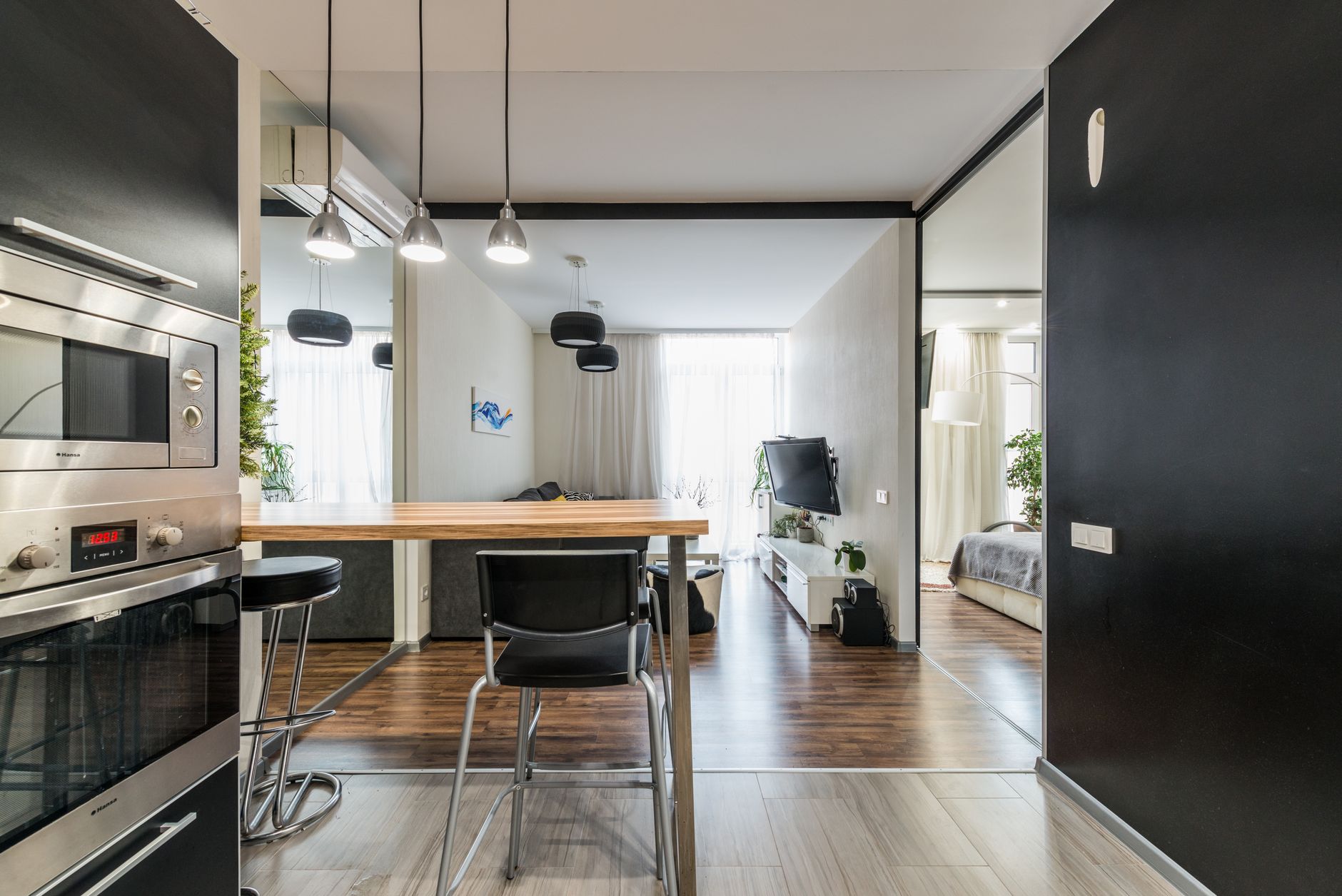
Packing your bags to move to the shadow of Mount Etna is a unique thrill. Catania is a city that wraps you up in its Baroque architecture, the scent of the sea, its bustling nightlife, and—let's be honest—the unmistakable taste of an arancino grabbed on the go between classes. But how is the real estate market shaping up for the current academic year?
In this comprehensive and updated guide, we'll take a deep dive into the Catania student housing market for 2026. We'll look at real prices, which neighborhoods to choose based on your faculty, and how to avoid the classic freshman traps. Get comfortable: we're about to find your new home in Catania!
The University of Catania (UniCT): A Historic Institution in 2026
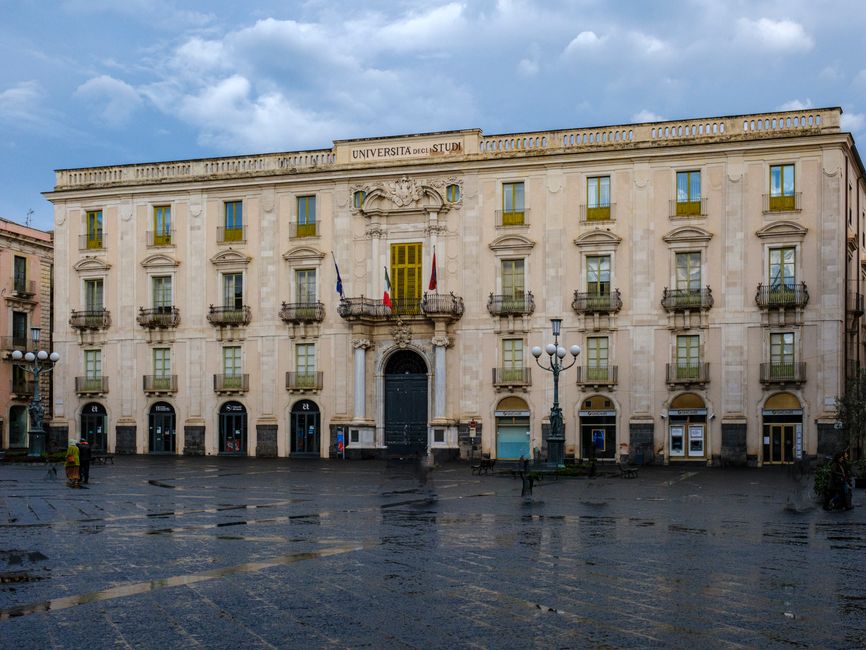
Before figuring out where to look for a house, it's crucial to know where you'll be studying. The University of Catania (UniCT) isn't just a university: it's a piece of history. Founded in 1434, it's the oldest university in Sicily and one of the largest in Italy.
In 2026, the academic offering is vast and spread throughout the city. The university is organized into 17 departments covering every field of knowledge. Your choice of neighborhood will depend heavily on which of these areas you'll be attending.
Medical and Scientific Area
If your future involves a white coat or a laboratory, you'll spend a lot of time in these facilities:
- Medical Area: Includes General Surgery and Medical-Surgical Specialties; Clinical and Experimental Medicine; Biomedical and Biotechnological Sciences (BIOMETEC); Medical, Surgical Sciences and Advanced Technologies "Ingrassia".
- Scientific Area: Here we find the Department of Physics and Astronomy "Ettore Majorana"; Mathematics and Computer Science; Biological, Geological and Environmental Sciences; Drug and Health Sciences.
These departments are mainly clustered around the large hub of the Cittadella Universitaria (University Citadel), located in the northern part of the city.
Technical, Humanities, and Social Area
If you're leaning towards technical, economic, or humanities subjects, your campuses will be different:
- Technical Area: Includes Civil Engineering and Architecture (DICAR); Electrical, Electronic and Computer Engineering (DIEEI); Agriculture, Food and Environment (Di3A).
- Humanities and Social Area: We find Economics and Business; Law (housed in the magnificent and historic Palazzo delle Scienze); Education Sciences (DISFOR); Political and Social Sciences (DSPS); and Humanities (DISUM).
Many of the humanities faculties are located right in the historic city center—a crucial detail to keep in mind when you start evaluating Catania university neighborhoods for your rental.
Room Rental Prices in Catania in 2026
📷 pierre matile / Pexels
Let's get down to business: how much does it cost to live in Catania today? For 2026, the rental market is showing an upward trend. This is driven by consistently strong student demand and recent urban regeneration plans that are beautifying the city.
But I have good news for you: although prices are slightly increasing, Catania remains significantly cheaper than the big metropolises of Northern Italy. The cost of a room has stabilized in a middle range that reflects the quality of the property, its proximity to university hubs, and, above all, its distance from subway stations.
Here is a detailed overview of the average prices expected for 2026:
- Standard Single Room: The average price ranges between €250 and €350 per month (utilities excluded). This is the most common and highly requested option.
- "Premium" Single Room: If you're looking for a room in a newly renovated apartment, with brand-new furniture or perhaps a private en-suite bathroom, prices go up, settling between €380 and €450 per month.
- Bed in a Shared Double Room: For those who want to save as much as possible and love total sharing, a bed in a double room costs between €180 and €230 per month.
- Studio Apartment: If you want total independence and no roommates, renting a studio in Catania in 2026 will cost you between €500 and €700 per month.
Watch out for extra costs: When calculating your monthly budget, remember that utilities are almost never included. Keep in mind that in 2026, additional expenses for electricity, gas, water, internet, and building maintenance (condominio) will add about €50 - €80 per month on top of your base rent.

📷 pierre matile / Pexels
Catania University Neighborhoods: Where Should You Live?
Choosing your neighborhood is the most important decision you'll make. Catania is a complex city, nestled between the sea and the slopes of the volcano. Let's take a closer look at the best Catania university neighborhoods for the current year.
The Student Hubs (The Most Popular)
These are by far the most sought-after areas for out-of-towners, where you can truly breathe in the university lifestyle.
Borgo / Vulcania / Sanzio
This is the ultimate strategic area if you study scientific or medical subjects, thanks to its proximity to the Cittadella Universitaria. Being a very convenient residential area, prices for a single room range between €280 and €350. It must be said that many properties in this area are a bit dated, but if you're lucky enough to find recently renovated homes, the rent can reach up to €400.
Centro Storico (Via Etnea, Via Crociferi, San Giuliano)
If you want to experience the true essence of Catania, this is the place to be. It's the most beloved neighborhood for nightlife, bars, pubs, and its proximity to humanities faculties like Literature and Law. The market here is very diverse: you can find bargains at €250 in older buildings (maybe with a few extra drafts), but if you're aiming for rooms in perfectly restored historic buildings, the price easily hits €380.
Cibali / Rapisardi
If you're looking for a compromise between cost and convenience, these residential neighborhoods are ideal. They are quieter than the chaotic city center but are well-connected thanks to the Metro stops. Prices here are very competitive: on average, you'll spend between €240 and €300 for a single room.
The High-End Areas (Professionals and Residents)
Corso Italia / Tribunale / Viale Vittorio Veneto
This is considered the most elegant, well-kept, and expensive area of the city. It's the preferred area for out-of-town workers, medical residents, and Economics students. The streets are wide, luxury shops are plentiful, and the buildings are stately. A single room in this neighborhood starts at a baseline of €350 and easily reaches €450.
Developing and Budget-Friendly Areas
Picanello / Ognina
If you can't live without the sea breeze, the Ognina and Picanello area is perfect. Located near the sea and well-served by public transport, it offers a very relaxed quality of life. Average prices here hover around €250 – €300 for a single room.
San Giovanni La Punta
Although technically a neighboring municipality, many students choose it for its tranquility and lower prices, especially if they have a car or are willing to use suburban transport to reach the nearby Cittadella.
San Cristoforo / Librino
For the sake of completeness, we should mention these neighborhoods where prices can drop below €200 for a room. However, they are the least requested areas by university students. The supply in the traditional student market is very limited, mainly due to the distance from the main university hubs and a different perception of nighttime convenience.
How the Catania Student Housing Market is Changing in 2026
2026 is a year of major transformations for Catania, and this is directly impacting the market for rooms for rent in Catania. There are two main factors you need to know about:
- The 2026 City Plan: A massive urban redevelopment plan is currently underway. This project involves 17 historic public buildings (notably the Ex Palazzo delle Poste and the Ex Educandato Regina Elena). These works are leading to a clear improvement in services, lighting, and urban decor, especially in areas like the Tribunale neighborhood and the historic center. Consequently, the value of surrounding rentals is inevitably rising.
- The Metro Extension (FCE): In Catania, the subway managed by the Ferrovia Circumetnea (FCE) is becoming the main driver of real estate prices. Living near strategic stops like Stesicoro, Giuffrida, or Milo is a huge advantage for a student. Currently, proximity to these stops guarantees a rent premium of about 10-15% compared to areas not served by the underground network.
How to Find a Home (And the Perfect Roommate)
House hunting can be stressful, I know that all too well. For the 2026/2027 academic year, my honest advice is to start early. The absolute best time to start looking and secure a room is between May and July. If you wait until September, you'll end up settling for the "leftovers" at inflated prices.
Until a few years ago, students relied exclusively on Facebook groups like "Affitti Catania Studenti"—which are still active for finding private listings without agency fees—or classic real estate portals. But today, there's a much smarter and safer way.
If you're looking for a room or want to avoid ending up in a house with people whose lifestyle clashes with yours, I highly recommend downloading the Coinquilino app. Coinquilino is Italy's #1 free app for rooms and roommates. Instead of scrolling through endless, unfiltered ads, on Coinquilino you can find verified profiles in just a few minutes. You can set your preferences (are you a party animal or a hardcore study-in-pajamas type?) and match with guys and girls who share your habits. It's an absolute lifesaver for us out-of-town students!
The Rental Agreement: Golden Rules
When you find the perfect room, don't rush into things. Always demand a proper written contract. The ideal type for you is the contratto a canone concordato per studenti universitari (agreed-rent contract for university students).
Why is this so important? Besides protecting you legally, this type of contract allows you to access tax benefits. If you are an out-of-town student and your official residence is more than 100km from the university (according to current regulations), you can deduct a portion of your rent expenses on your parents' tax return (the modello 730). It's a significant saving that will pay for a few seafood dinners downtown! You can learn more by reading our guide to student rental contracts.
Transportation and Cost of Living in Catania
Living in Catania doesn't just mean paying rent. You also have to factor in transportation and daily expenses.
The public transport system in Catania relies on two pillars:
- Urban buses (AMT): They cover the city extensively, though sometimes you need a bit of patience with the schedules due to city traffic.
- The Metro (FCE): As we've seen, it's the fastest and most reliable way to get around, especially to reach the center or the areas bordering the Cittadella.
The fantastic news for you students is the cost: thanks to university agreements, the integrated monthly pass for public transport costs only €22 per month. An unbeatable price compared to other Italian university cities!
As for the general cost of living (groceries, nights out, gyms), Catania remains a very "student-friendly" city. Local street markets, like the famous Pescheria or the Fera 'o Luni, will allow you to buy fruit, vegetables, and fresh local products at rock-bottom prices, while fully experiencing the local folklore.
DSU, University Canteens, and Student Life
Don't forget to check the announcements from the Regional Agency for the Right to Higher Education (ERSU). If you fall within certain income brackets (ISEE), you can access scholarships, housing in public university residences, and significant discounts for university canteens scattered throughout the city.
Catania also offers numerous libraries and study rooms, many of which are located in breathtaking historic buildings, such as the Benedictine Monastery (home to DISUM), where studying becomes an aesthetic experience as well as an intellectual one.
---
FAQ: Frequently Asked Questions About Renting in Catania
How much does a room for rent in Catania cost on average in 2026?
In 2026, a standard single room in Catania costs on average between €250 and €350 per month, excluding utilities. Renovated singles or those with a private bathroom can reach €380 - €450, while a bed in a shared double room hovers between €180 and €230.
What are the best university neighborhoods in Catania?
If you study scientific/medical subjects, the Borgo/Vulcania/Sanzio area is the best due to its proximity to the Cittadella. If you study humanities, the Historic Center (Via Etnea, Crociferi) is ideal. Cibali and Rapisardi are excellent, more affordable alternatives served by the Metro.
How much do utility bills add to the monthly rent?
In Catania, in 2026, you should calculate an additional cost of about €50 - €80 per month to cover utilities (electricity, gas, water, internet) and building maintenance fees (condominio), which are rarely included in the base rent.
How does the public transport pass work for students?
The University of Catania offers excellent agreements. The monthly public transport pass for students costs only €22 per month.