How much does a room near Politecnico really cost in 2026?
Start with the uncomfortable part. Searching for a clean, dated, source-named figure for "average room price near Politecnico" turns up plenty of neighbourhood price tables on aggregator sites, and almost none of them say where the number came from or when it was measured. Numbers without a date are decoration. So instead of inventing one, use the anchors that do carry a source.
The widest anchor: Mioaffitto.it put Turin's average rental listing at €1,075 per month in July 2026, down 5.5% over the previous six months and up 0.28% month over month. That figure covers whole properties of every size, not rooms, so treat it as the ceiling of the ceiling.
The narrower anchor sits at the campus edge. Casaland.it's Turin market report gives the Regio Parco / Vanchiglia area an average of €12.21 per m² per month in July 2025, up 6.64% year on year. It is an agency blog rather than a primary dataset, so weight it accordingly, but the direction it shows matches everything else in this market: near-campus zones are rising, not falling.
Why is Turin still cheaper than Milan?
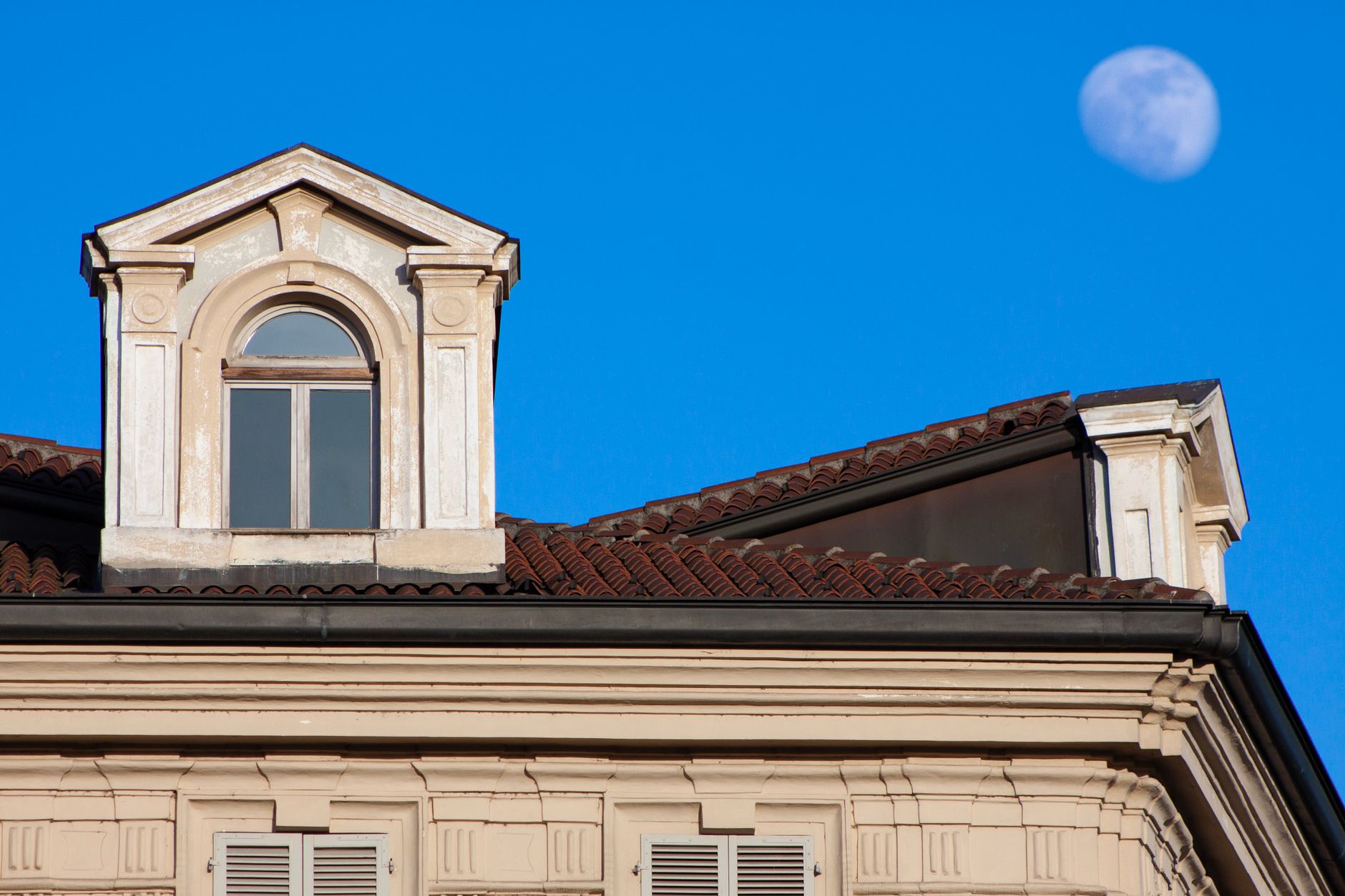
📷 antonio filigno / Pexels
The gap is structural, not a seasonal dip. Il Post's June 2026 piece on why Turin's housing stayed cheap puts the city's average rent at roughly €12 per m² against Milan's €22.80 per m² — close to half. On the sale side the distance is even wider: about €2,223 per m² in Turin versus €5,653 per m² in Milan, per the same Il Post analysis.
For an Erasmus student choosing between two Italian engineering cities, that spread is the whole argument. Turin gives you a top-tier technical university in a city where the housing market has not yet priced students out.
The caveat is the trend line. Il Post's own explanation for the current pressure is demand: Turin's student population grew from about 33,000 in 2019 to over 44,000 in 2024, while short-term Airbnb-type rentals rose 50% over seven years. Cheap relative to Milan is not the same as cheap and stable.
Which neighbourhoods do Politecnico students actually rent in?
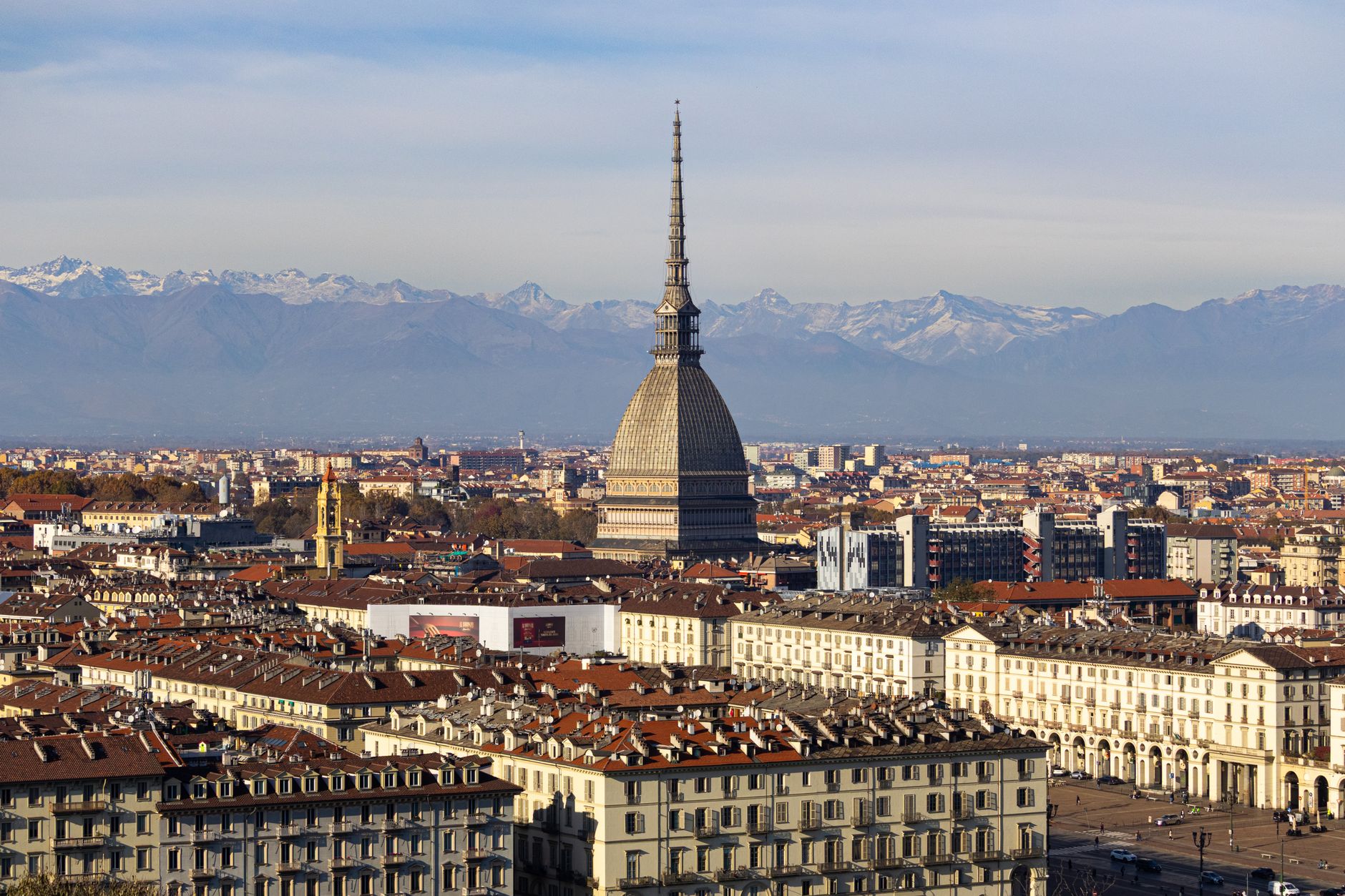
📷 Ariadne Barroso / Pexels
The main Politecnico campus sits on corso Duca degli Abruzzi, with its own stop on metro Line 1. That single fact reshapes the price map: anything on Line 1 competes with walking distance, and anything more than a couple of stops out competes on price instead.
Walkable-to-campus areas — Crocetta, Cenisia, San Paolo, the northern edge of Santa Rita — are where the "just show up and knock on doors" strategy dies fastest, because local students book them first. Expect these to sit above the citywide averages quoted earlier rather than below.
The budget alternative that keeps showing up in the data is the Vanchiglia / Regio Parco side, closer to the humanities campus but a reasonable commute to Politecnico. That is the zone Casaland.it measured at €12.21 per m² per month in July 2025, rising 6.64% year on year — cheaper, but no longer sleepy.
Barriera di Milano and Aurora are cheaper again. There is no verified per-m² figure here worth quoting, so judge them the way locals do: visit at 9pm, not at noon, before you decide.
Is an EDISU room cheaper than the private market?
EDISU Piemonte is the regional public agency for student housing and grants, and its residences are the one price in Turin published as an official tariff rather than an estimate. For the fee-paying accommodation tier in academic year 2025/26, EDISU's published rates are €12.14 per night for a single room and €10.27 per night for a double.
Doing the arithmetic on EDISU's own nightly rate, a 30-day month works out at roughly €364 for a single and €308 for a double — utilities and residence services included, which is not true of most private rooms.
Scholarship holders are on a different mechanism entirely. Torino Cronaca reported for the 2025/26 expansion that scholarship students have €2,700 deducted from their grant to cover 11 months of accommodation, rather than paying rent directly — about €245 a month, on the same arithmetic.
Supply is the catch. That same 2025 report covered 115 new bed spaces, including a 24-space Alexandra residence and a 28-space Campus x Vanchiglia site opening on 1 October 2025. Against a student population that has grown by more than 11,000 in five years, public beds are a lottery you enter early, not a fallback.
What do you actually pay on top of the rent?
The deposit (caparra, formally deposito cauzionale) is capped by law. Article 11 of Legge 392/1978, the equo canone law, states it cannot exceed three months' rent, and the landlord owes you legal interest on it every year — see the text on Brocardi. Anyone asking for four or five months is outside the law, not driving a hard bargain.
Then the contract itself. The Agenzia delle Entrate (the Italian tax authority) requires a rental contract to be registered within 30 days of signing, or of the start date if that comes first, and registration is mandatory regardless of the rent amount, with only very short lets of 30 cumulative days a year exempt.
Registration is also the paperwork that makes your address real for a permesso di soggiorno (residence permit) file and for residency. You need a codice fiscale (Italian tax code) before you can be named on the contract at all, so get it before you start viewing, not after.
Landlords sometimes claim registration costs them too much. In practice most opt into cedolare secca, the flat tax on rental income: the Agenzia delle Entrate sets it at 21% on free-market canone libero contracts and 10% on canone concordato (agreed-rate) contracts in high-demand municipalities. A refusal to register is a choice, not a burden.
How do you check a Turin price is fair before you sign?
Use the source the property portals themselves quote. The Agenzia delle Entrate's Osservatorio del Mercato Immobiliare (OMI) publishes zone-by-zone rental and sale ranges twice a year, free, with the latest published dataset at the time of writing being the second semester of 2025.
Look up the specific OMI zone your listing sits in, not "Turin". The database returns a €/m² band for residential property in that micro-area, which tells you within minutes whether an asking price is inside the market or above it.
Two adjustments before you compare. OMI quotes whole dwellings, so a room in a shared flat carries a share of the kitchen, bathroom and hallway — your effective price per usable m² is always worse than the headline. And utilities are frequently excluded in Turin listings, which matters in a city with real winters.
If the numbers still look off, that is your negotiating material: a printed OMI band for the zone is harder to argue with than a feeling.
When should you start looking, and where?
Turin's supply squeeze is documented rather than anecdotal: over 44,000 students in 2024 against roughly 33,000 in 2019, plus a 50% rise in short-term rentals over seven years, according to Il Post's June 2026 reporting. Two pressures pulling the same rooms in opposite directions.
The practical translation: September is late, August is normal, July is comfortable. If your Erasmus placement is confirmed in spring, start then — the good rooms near corso Duca degli Abruzzi never reach the public listing stage twice.
Search in more than one place. Portals, university noticeboards, Politecnico student groups and room-sharing apps each surface different stock, and the overlap is smaller than you would expect. Coinquilino (coinquilino.app), a free app for finding rooms and roommates in Italy, is one of those channels — full disclosure: Coinquilino is our app. If you want the unflattering comparison of the alternatives, we wrote an honest comparison of room-finding apps in Italy.
For context on how Turin sits against other Italian university cities, our Pisa rent prices breakdown runs the same exercise around Sant'Anna.
Is €500 a month realistic for a room near Politecnico?
No verified per-room average for the Politecnico zone exists from a dated, named source, so treat any exact figure — including that one — with suspicion. Build your expectation from the anchors instead: Mioaffitto.it's €1,075 citywide average for whole properties in July 2026, and EDISU's official €12.14 per night for a public single room in 2025/26.
Can a landlord ask for three months' deposit?
Yes, but not more. Article 11 of Legge 392/1978 caps the deposito cauzionale at three months' rent and obliges the landlord to pay you legal interest on it annually. Pay it traceably — bank transfer, never cash without a receipt.
Do I need a codice fiscale before renting in Turin?
Yes. The codice fiscale is the Italian tax code that identifies you on the contract, and without it you cannot be a named tenant on a registered lease. If you already have one with an error in it, our guide on fixing a codice fiscale mistake covers the correction route.
What is a contratto transitorio and should I sign one?
A contratto transitorio is a fixed short-term rental contract for temporary needs, often offered to students and mobile workers. It is legitimate and registrable — the thing to check is that it is actually registered with the Agenzia delle Entrate within the 30-day window, since an unregistered contract leaves you with no provable address.
Is Turin genuinely cheaper than Milan for a student?
On the published averages, clearly. Il Post's June 2026 analysis puts Turin at around €12 per m² of average rent against Milan's €22.80 per m². The direction of travel is the part to watch, not the current gap.
Why do landlords resist registering the contract?
Usually to avoid declaring the income, not because registration is expensive. The Agenzia delle Entrate offers cedolare secca at 21% on canone libero contracts and 10% on canone concordato ones in high-demand municipalities, so the legal route is available and cheap. An unregistered room is a room you can be removed from with no recourse.
---
This article was produced with the help of AI tools and reviewed by the Coinquilino editorial team.