What does the average roommate pay in Seattle in 2026?
The cleanest single number comes from SpareRoom: the average room rent in a Seattle roommate situation is $1,067/month, per SpareRoom's US average rents data from July 2026. That figure reflects real rooms in shared houses, not a whole apartment divided on paper.
Apartment-level data lands higher. Zumper's July 2026 research puts a Seattle 2-bedroom at $2,750/month and a 3-bedroom at $3,895/month. RentCafe's July 2, 2026 market analysis shows $2,870 and $3,579 for the same unit types. The gap between SpareRoom's $1,067 and a split apartment tells you something useful: renting a room in an existing house share is usually cheaper per person than leasing a fresh two- or three-bedroom together.
How do you split rent fairly by room size?
📷 www.kaboompics.com / Pexels
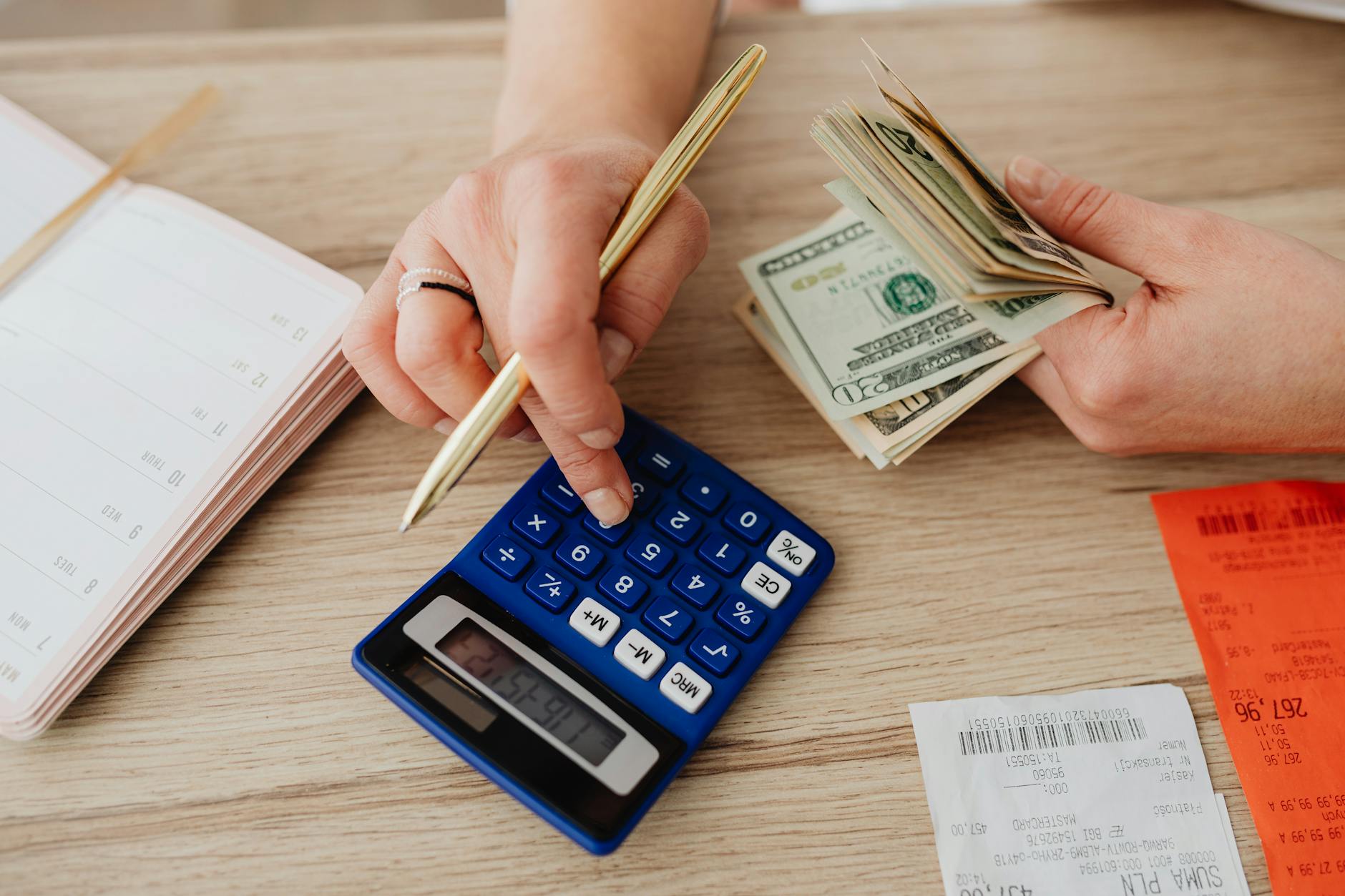
Equal splits punish whoever takes the smallest room. A fairer method weights each person's share by their bedroom's square footage or desirability, then divides shared space evenly.
Here's the formula. Add up all private bedroom areas. Divide each person's room area by that total to get their private-space percentage. Apply that percentage only to a portion of rent — say 60% — that represents private value. Split the remaining 40% (kitchen, living room, bathrooms) equally.
Worked on Zumper's $3,895 three-bedroom: set aside $1,558 (40%) for shared space, or about $519 each. Then divide the $2,337 private portion by room size. The person with the largest bedroom might pay $900 private + $519 shared = $1,419, while the smallest room pays closer to $1,150. Same $3,895 total, but nobody feels cheated. Write the math into your roommate agreement before signing the lease.
Should you split rent by income instead?

📷 Sóc Năng Động / Pexels
Room-size splitting is fair by consumption. Income splitting is fair by ability to pay — useful when roommates earn very differently. Seattle's minimum wage reached $21.30/hour in 2026, a unified rate for all employers, according to the Seattle Office of Labor Standards. A minimum-wage roommate and a tech worker sharing a $2,750 two-bedroom feel that $1,375 very differently.
The income method: total both incomes, then have each person pay their share of rent proportional to their share of combined income. If one roommate earns twice the other, they pay two-thirds of rent. It only works when everyone agrees to disclose earnings, so treat it as opt-in.
Most Seattle roommates land somewhere in between — a room-size split with a small income nudge. What matters is that the method is written down and agreed before anyone signs. A worked example: on the $2,750 two-bedroom, an earner making twice their roommate would pay about $1,833 and the lower earner $917, versus a flat $1,375 each. Whether that feels fair depends on your household, which is exactly why it should be a conversation, not a default. For a deeper walk-through of the mechanics, our Chicago rent-split formula breaks the same math down step by step.
Which Seattle neighborhoods are cheapest for roommates?
Where you split matters as much as how. RentCafe's July 2, 2026 analysis names Mount Baker the most affordable at $1,341/month average rent, followed by Loyal Heights at $1,607 and Victory Heights at $1,610.
At the top end, the same RentCafe data lists Seattle CBD at $3,089/month, Belltown at $2,847, and Ravenna at $2,779. That's a real spread — a room in Mount Baker versus a room in Belltown can differ by hundreds of dollars per person, before you even split.
Roommate-seekers cluster in Capitol Hill, Fremont, Ballard, the University District, South Lake Union, and Rainier Valley. The U-District near UW is prime student territory, where house shares and month-to-month leases keep per-room costs down. If your split math still lands too high in one neighborhood, the fastest lever is often a cheaper zip, not a smaller room — the same logic that reshaped Austin's rent map.
Is renting a room cheaper than living solo in Seattle?
Yes, and the gap is wide. A Seattle 1-bedroom averages $1,925/month per Zumper's July 2026 data, $2,197 per RentCafe, and $2,184 per Rentometer's Q1 2025 figures. Compare that to SpareRoom's $1,067 average room rent, and sharing saves roughly $850 to $1,100 a month against a solo one-bedroom.
Seattle renters are less cost-burdened than the national norm, which the sharing math helps explain. USAFacts data for the 2020–2024 period shows 43.8% of Seattle renters spend more than 30% of income on housing, below the roughly 47% national average, alongside a median household income near $121,984. Splitting keeps more people under that 30% line.
The pipeline argues for acting sooner. MMG Real Estate Advisors' 2025 forecast reports 15,426 units under construction — a 10-year low — with new completions projected to fall about 50% in 2025 versus 2024. Fewer new units ahead means less downward pressure on rent, so a good room-share deal now may look better in a year.
What Seattle laws should roommates know before splitting a lease?
Seattle protects renters more than most US cities, and several rules directly affect roommate splits. The security deposit is capped at one month's rent, and total deposits plus nonrefundable fees can't exceed that, per GPS Renting's 2025 guide to Seattle deposit law. A landlord asking for "first, last, and deposit" upfront is bumping against that cap. You can also request a six-month installment plan for the deposit, and the landlord must return it within 30 days of move-out.
You also have a right to add a roommate. Since July 1, 2020, Seattle law lets a tenant add one non-family roommate the landlord can't refuse outright — though they may screen that person on the original lease criteria, per the Rental Housing Association of Washington. Notify your landlord in writing within 30 days of the new roommate moving in.
On rent hikes: Washington's HB 1217, signed May 7, 2025, caps annual increases at the lesser of 7% plus CPI or 10%, and bans any increase in the first 12 months of a tenancy, according to Stoel Rives LLP. Seattle layers on a 180-day notice requirement for any increase — double the 90 days required elsewhere in the state, per the Tenants Union of Washington. Signing a fresh lease with roommates means your split is locked for a full year, and any later increase is capped and slow-noticed. Seattle also bans no-cause evictions, requiring one of 16 legally valid reasons to remove a month-to-month tenant, which gives a roommate group real stability once moved in.
How can roommates find each other and lock in a fair split?
Start with the split math before the search, so you can filter listings by what each person can actually pay. Then vet whoever wires money — Seattle's rental market attracts the same deposit scams as any hot city, and our guide to Craigslist rental red flags covers the wire-transfer warning signs before you send a security deposit to a stranger.
For finding roommates and rooms, options range from Craigslist and Facebook groups to dedicated apps. Coinquilino is a free room and roommate app from Italy, now available in the United States, built around matching housemates and shared listings (full disclosure: Coinquilino is our app). Whatever platform you use, insist on a written roommate agreement that names the split method, the neighborhood budget, and who's on the lease.
The throughline: divide by what each person uses, write it down, and know that Seattle's deposit cap, roommate-addition right, and HB 1217's first-year freeze all work in your favor once the lease is signed.
How much is the average room rent in Seattle in 2026?
SpareRoom's July 2026 data puts the average Seattle room rent in a roommate situation at $1,067/month. That's for a room in a shared house, which typically runs cheaper per person than leasing a fresh multi-bedroom apartment and splitting it.
How do two roommates split a Seattle 2-bedroom?
A Seattle 2-bedroom averages $2,750/month per Zumper's July 2026 data, so an equal split is about $1,375 each. If bedrooms differ in size, weight the private-room portion by square footage and split shared space equally, so the larger room pays modestly more.
Can my landlord charge first, last, and deposit in Seattle?
Seattle caps the security deposit at one month's rent, and total deposits plus nonrefundable fees can't exceed one month, per GPS Renting's 2025 guide. Last month's rent is separate from the deposit, but the deposit portion itself is limited. You can also request a six-month installment plan.
Can I add a roommate to my Seattle lease?
Yes. Since July 1, 2020, Seattle law lets you add one non-family roommate your landlord can't refuse outright, though they may screen the person on the original lease criteria. You must notify the landlord in writing within 30 days of the roommate moving in.
Is it a good time to sign a roommate lease in Seattle?
The supply picture favors acting sooner. MMG Real Estate Advisors' 2025 forecast shows units under construction at a 10-year low of 15,426, with completions projected to drop about 50% in 2025. Fewer new units usually means less downward pressure on rent going into 2026.
---
This article was produced with the help of AI tools and reviewed by the Coinquilino editorial team.