Why did Austin rents drop so much in 2026?
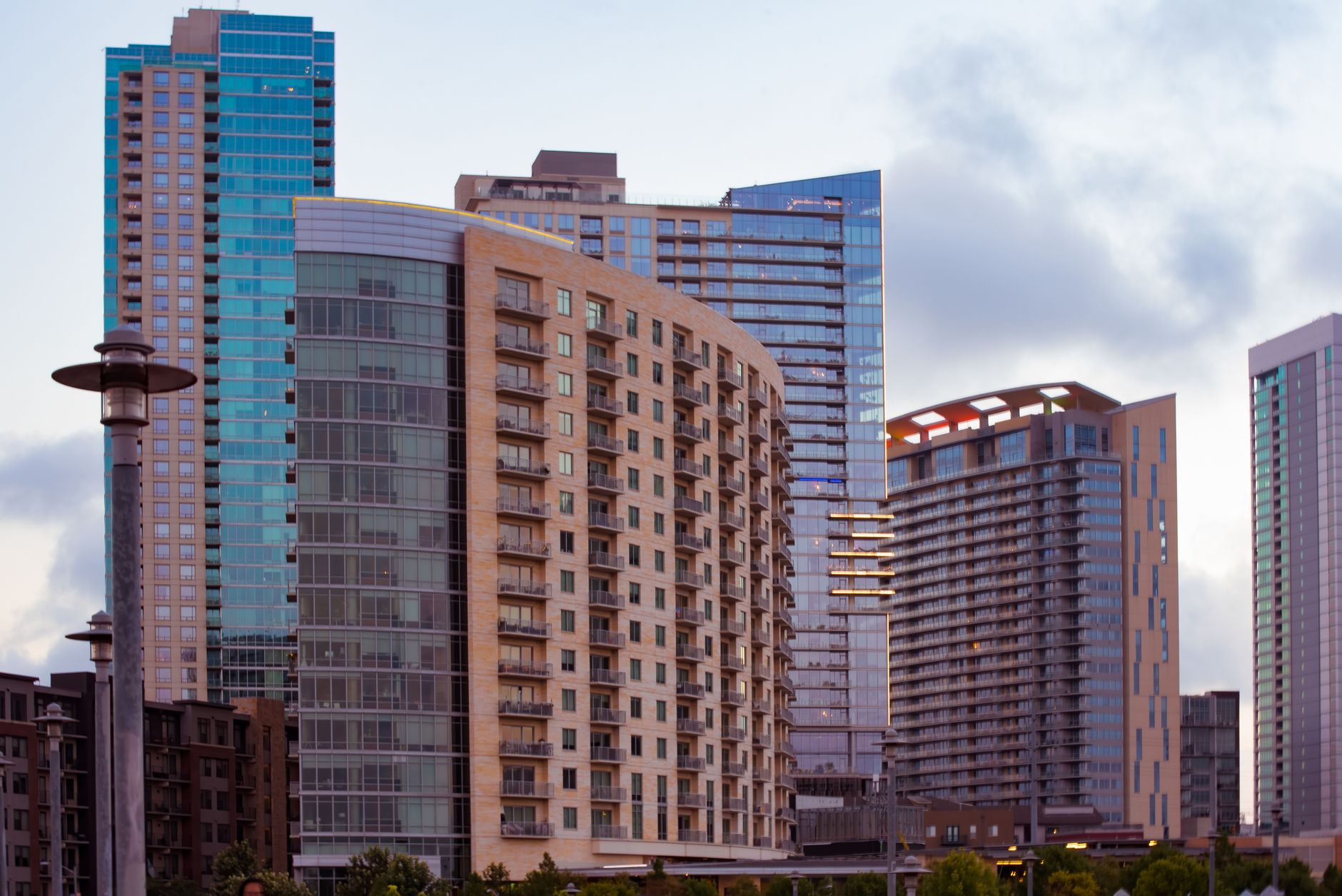
One word: supply. Austin built more housing than almost any U.S. metro, and it caught up with — then overtook — demand.
Between 2015 and 2024, Austin added 120,000 housing units, a 30% increase in total housing stock, according to The Pew Charitable Trusts' March 2026 analysis. The permitting pace was extreme: Austin issued 957 new apartment permits per 100,000 residents between 2021 and 2023 — nearly triple San Antonio-New Braunfels' 346, per the Texas Tribune's January 2025 reporting.
All that new inventory arrived at once. In apartment buildings with 50+ units, Austin rents fell 7% from 2023 to 2024 — the steepest decline in any large U.S. metro over that period, per Pew. When landlords compete for tenants instead of the other way around, prices fall. That's the whole story.
The timing matters for anyone relocating. During the 2021 remote-work rush, Austin was the market everyone bid up. The city responded by permitting aggressively, and those permits became finished units two to three years later — right as demand cooled. The correction you're reading about is that lag playing out in real time.
Which zip codes actually got cheaper?

📷 Thomas balabaud / Pexels
Honest answer: no single authoritative source publishes clean zip-by-zip price tables for Austin, so treat any "exact zip drop" claim with suspicion. The reliable granularity is neighborhood and submarket level, which maps closely to zips.
Using that mapping, the sharpest documented corrections cluster in South and Southwest Austin. Bouldin Creek sits inside 78704 (South Congress); Circle C Ranch sits in the 78739 area. The deepest concession activity concentrates in the 78748/78744 South and Southeast corridor. The cheapest absolute 1-bedrooms sit in the 78741 Riverside corridor and North Austin around Anderson Mill.
Meanwhile the core barely moved. Downtown's 78701 and West Campus stayed near the top of the range. So the practical takeaway for a remote worker: the deals are real, but they're geographic — you trade a shorter downtown commute for a materially lower rent by looking south and east. Verify the specific building's asking price rather than trusting a zip-wide average.
How much has the average rent in Austin dropped?

📷 Elsie Soto / Pexels
It depends which dataset you trust — and the gaps are worth understanding before you negotiate.
RentCafe data as of July 2, 2026 shows Austin's average apartment rent at $1,642 across all units, a 1.89% year-over-year decrease from $1,673. By bedroom count: studios average $1,302, 1-bedrooms $1,415, 2-bedrooms $1,820, and 3-bedrooms $2,417.
Zumper reports a much steeper 12.7% median drop to $1,596. Why the gap? Zumper tracks median asking rent on its platform; RentCafe uses broader weighted averages. Both are real — they measure different things. The Texas Tribune noted that inflation-adjusted rents fell 19% from the 2021 average to the 2025 average, with the median hitting $1,296 by January 2026 — 4% below the U.S. national median of $1,353.
Translation: whichever source you use, Austin rent is falling in real terms. Match asking prices against multiple platforms before you sign.
Which Austin neighborhoods got the cheapest?
Two neighborhoods posted almost cartoonish year-over-year declines, and a handful of zip corridors now sit well under $1,000 for a 1-bedroom.
Per Zumper's July 2026 data, Bouldin Creek rents fell 46.4% year-over-year to $1,650/month, while Circle C Ranch dropped 44.0% to $1,573/month — two of the sharpest neighborhood-level corrections in the city. These are large swings tied to Zumper's median-asking methodology, so treat them as directional signals, not guarantees.
For absolute affordability, RentCafe's July 2026 figures name the cheapest 1-bedroom neighborhoods: Riverside at $941, East Riverside-Oltorf at $954, and Anderson Mill at $975. Those map to the 78741 corridor (Riverside) and North Austin. The most expensive stay stubbornly high — West University at $3,593 and Downtown (78701) at $3,302. The affordability gap between east/southeast and the core is now enormous.
Where are landlords giving away free rent?
South and Southeast Austin — the 78748/78744 corridor — is where concessions got aggressive.
In February 2026, landlords in South/Southeast Austin were offering up to 3 months free rent, with several complexes starting 1-bedrooms below $1,100/month before concessions (roughly $1,045–$1,151 face rent), according to Taco Street Locating. Three months free on a 12-month lease cuts your effective monthly cost by 25%.
This isn't isolated. Roughly 40% of Austin rental listings were offering concessions as of mid-2026 — most commonly 4 to 12 weeks free — per Flat Fee Landlord's June 2026 report; in 2025, over 50% of large-building properties offered at least one month free.
Always calculate net effective rent: face rent minus the prorated value of the concession. A $1,500 unit with two months free on a 12-month lease is really $1,250/month. Ask which number the listing quotes — many advertise net effective to look cheaper.
One caution on concessions: the free weeks usually apply only to the first lease term. When you renew, the face rent snaps back. If a building is dangling three months free, ask what the renewal rate looks like before you fall in love with the net effective number — otherwise your year-two rent could jump sharply even in a soft market.
Is the Austin rent drop going to last?
Probably through 2026, but the tap is closing. Read the pipeline, not just today's price.
Austin's apartment vacancy rate stood at 13.5% in Q1 2026 — the highest in nearly a decade — with asking rent per unit at $1,500 and rent growth at -4.7%, per Matthews Real Estate's Q1 2026 multifamily report. The metro rate hit 13.8% by mid-2026, and analysts don't expect rents to rise meaningfully until 2027 at the earliest, per Relocity's April 2026 trends report.
But supply is cresting. New deliveries are projected to fall to just 4,600 units in 2026 — a 74% drop from roughly 17,500 in 2025, per Flat Fee Landlord. And demand is stirring: Austin absorbed 3,800 units in Q1 2026 against only 2,000 delivered, though 14,600 units remain under construction, per Matthews.
So: the deals are real now, but the window narrows as the construction backlog clears. If you find a strong concession, lock a longer lease to hold that rate past 2027.
How do I actually find and vet these deals?
The cheap listings are real, but so are the scams that piggyback on a hot search term like "cheap Austin rent."
Start by scanning listings across RentCafe, Zumper, and local locating services, then verify asking prices against each other. If a place looks dramatically underpriced, ask whether the number is face rent or net effective. Never wire a deposit before you've toured or verified the landlord — see our guide to Craigslist rental scam red flags before sending a dollar. If you're weighing Austin against pricier markets, our breakdown of Brooklyn rooms under $1,500 shows how far your budget stretches elsewhere.
If you're relocating solo and want to split rent or find a roommate to make a 2-bedroom cheaper than a 1-bedroom, Coinquilino is a free room and roommate app from Italy, now available in the United States (full disclosure: Coinquilino is our app). It's one option among many for the roommate-matching side — the price research above stands on its own.
Is now a good time to move to Austin for rent savings?
Yes, if you value price. Austin rent is down 12.7% year-over-year to a $1,596 median per Zumper's July 2026 data, vacancy is near a decade high, and ~40% of listings carry concessions. The savings window likely holds through 2026 before supply tightens.
What's the cheapest Austin neighborhood for a 1-bedroom in 2026?
Per RentCafe's July 2026 data, Riverside averages $941 for a 1-bedroom, followed by East Riverside-Oltorf at $954 and Anderson Mill at $975 — versus West University at $3,593 and Downtown at $3,302.
What is net effective rent and why does it matter?
Net effective rent is the face (advertised) rent minus the prorated value of any concession. With ~40% of Austin listings offering 4–12 weeks free in 2026, the number on the sign often overstates what you'll actually pay. Always ask which figure a listing quotes.
How fast must a landlord return my security deposit in Texas?
Under Texas Property Code §92.103, landlords must return security deposits within 30 days of move-out, per the Texas State Law Library. If they wrongfully withhold any amount, you can sue for 3× the withheld sum plus attorney fees under §92.109. Texas has no statewide cap on deposit amounts.
Will Austin rents go back up soon?
Not immediately. Vacancy sat at 13.8% in mid-2026, and analysts don't expect meaningful rent increases until 2027 at the earliest, per Relocity. But 2026 deliveries are projected to drop 74% from 2025, so the downward pressure eases over time.
---
This article was produced with the help of AI tools and reviewed by the Coinquilino editorial team.