
What is the average rent for a student room in Ghent in 2026?
Two authoritative figures anchor the market. The City of Ghent's student housing survey from November 2024 put the average all-inclusive room at €544.11/month, up from €522.74 in 2023 and just €401 in 2020. UGent's Student Portal, quoting the 2025-2026 academic year, lists €542/month for a standard kot and €701/month for a one-person studio.
Those numbers are all-in huurprijs — utilities included, the way most Ghent koten are priced. The jump from €401 in 2020 to €544 in 2024 is a 35% climb in four years. City alderman Filip Watteeuw told VRT NWS the price "is rising somewhat more than inflation" — a sharp corona-era increase "was never corrected." So when a listing quotes €540, it is not a bargain; it is the middle of the pack.
How much does rent vary by Ghent district?
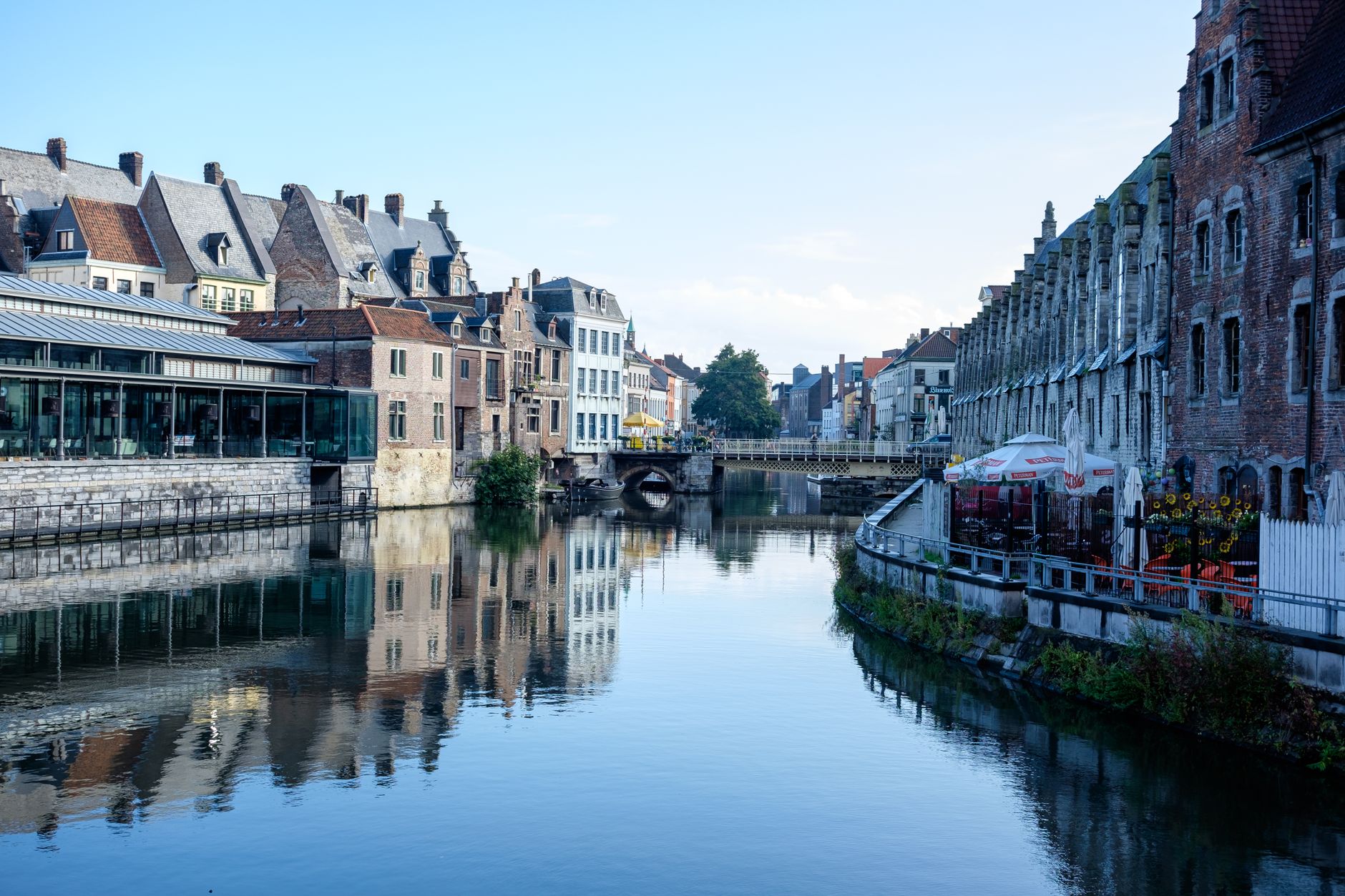
📷 Mayumi Maciel / Pexels
District-level ranges come from listing aggregator Kotfinder.be, so treat them as indicative rather than survey medians. Still, the pattern is clear and matches how students actually search.
According to Kotfinder.be, the Gent Centrum / Kuip van Gent core runs €450–€700/month — the priciest band. Coupure / Citadelpark, wedged against UGent faculties, sits at €400–€600. Muinkparkwijk, near UGent's south campus and HOGENT, matches that €400–€600. The Sint-Pietersstation / Stationsbuurt stretches wider at €350–€600.
The affordable west — Rabot / Brugse Poort — and Ledeberg to the southeast both land at €300–€500/month. That is the single biggest lever a student controls: choosing Rabot over the binnenstad can save €150–€200 a month on the same all-in room, roughly a €1,800 gap across an academic year.
The geographic pull is real. According to the City of Ghent's survey, 41.7% of student renters cluster in the city centre, but traditional student pockets like Overpoort and Muinkparkwijk are steadily gaining share from that core. Where the crowd goes, prices follow — which is why the same €500 room feels scarce downtown and plentiful in Rabot.
Which UGent campus should decide where you live?
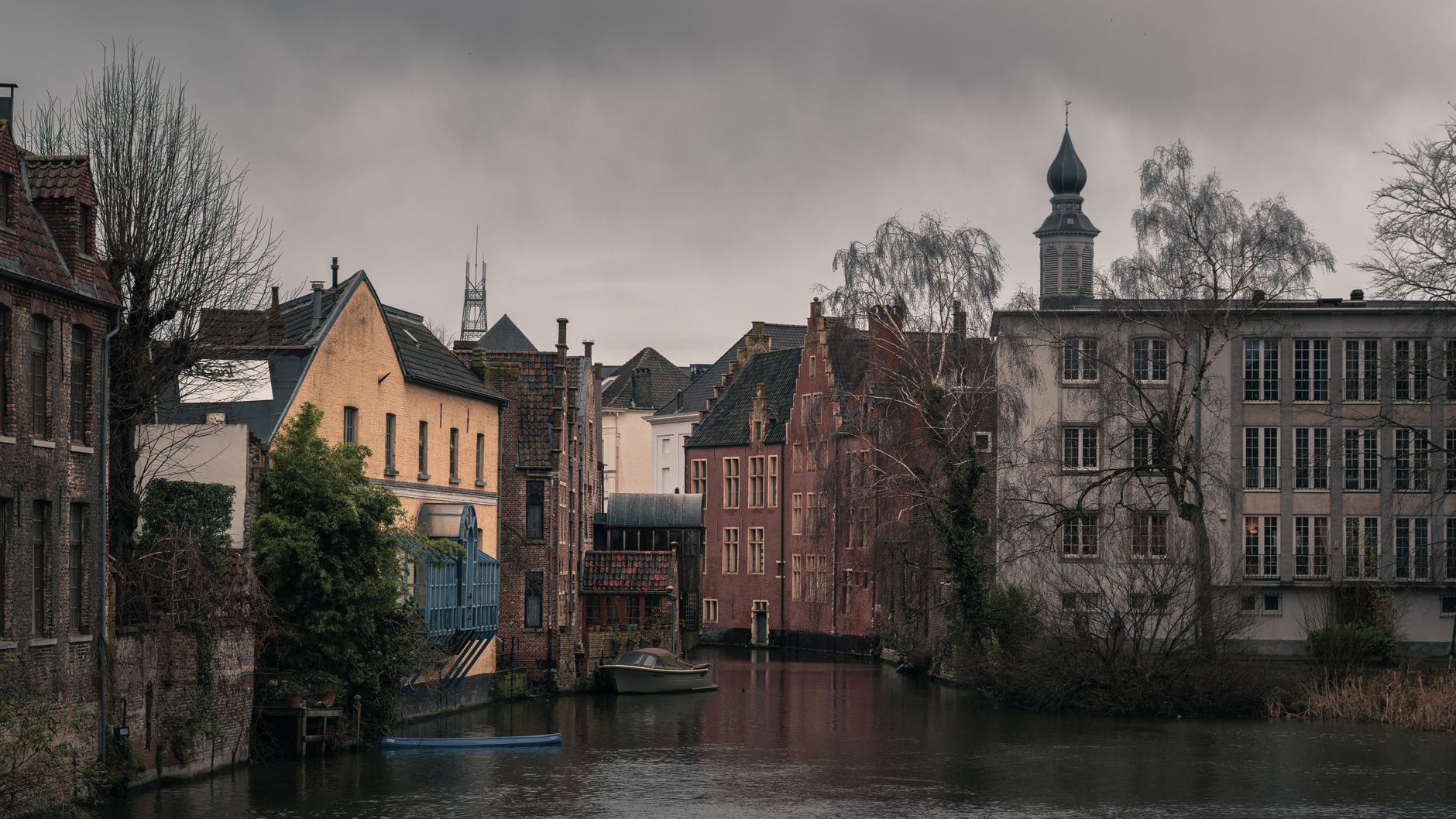
📷 LIZHI LIANG / Pexels
Rent means little without a commute attached. UGent spreads across three clusters, per the university's campus map.
The City Centre cluster — Aula, Ufo, Boekentoren, Tweekerken, Mercator, Dunant, Coupure — is walkable from Overpoortstraat, the student nightlife spine. If your faculty sits here, the Coupure and binnenstad koten justify their premium: you walk, you skip transit entirely. The Central cluster — Ledeganck, Sterre, UZ Gent, Heymans — sits south of the centre near Ledeberg and Muinkpark, which is exactly why those neighbourhoods draw science and medical students.
The South cluster — Zwijnaarde and Merelbeke-Melle — requires cycling or transit no matter where you live. For those students, a cheap Rabot room plus a bike often beats an expensive central one. Match the room to the campus, not the postcode's reputation.
Transit costs matter here because UGent gives no help. Per Stad Gent's transport page, UGent students receive no De Lijn discount — the university pushes cycling instead. A single De Lijn trip runs €3 as of August 2025, or €1.70 with a 10-trip card. Over an academic year, a daily commute from a distant cheap district can quietly erase part of the rent you saved, so factor the bike-versus-tram decision in before you sign.
Is Patershol or Dampoort a smart pick?
These are the two districts students ask about most — and the honest answer is that neither has a reliable survey figure. Patershol, the historic quarter northwest of the centre, is folded into the binnenstad category, so expect the €450–€700/month band from Kotfinder.be to apply, with its cobbled-lane charm pushing toward the top.
Dampoort, the eastern residential district with strong tram links, has no verified survey median at all. Live listings suggest floors around the mid-€400s, but that is an asking-price floor, not an average — so budget conservatively and inspect in person. Its value is connectivity: the Tram T1 line links UZ Gent, Sint-Pietersstation, Rabot and Muide, per Stad Gent's transport page, so an eastern room can still reach a central campus fast. If you are weighing districts, do it with a room in front of you, not a neighbourhood's reputation. Ghent's rental-scam patterns cluster exactly around "too good" listings in desirable central zones.
Why are Ghent rooms so hard to find?
Because demand structurally outruns supply. Ghent has 87,638 students, of whom roughly 43,800 need accommodation, according to VRT NWS — about half live op kot. The city's 2021 study estimated a shortage of around 10,000 rooms, a benchmark still cited in 2026 reporting.
The gap is not closing fast. VRT NWS reported that Ghent permitted over 2,000 new student rooms in 2026, but the student population grows by roughly 2,000 a year — so supply barely treads water. Scarcity is why prices sit above inflation and why the cheapest rooms vanish first.
The practical takeaway: the university-owned koten averaging €423/month (per VRT NWS) are the best value in the city, but they require registration via home.ugent.be and have limited stock. Apply early, or you are left competing for the €621/month private-operator rooms that fill the gap — a roughly €200/month difference between the cheapest and most expensive provider types for what is often a comparable room.
The pressure also explains the general-market context. For anyone considering a solo apartment instead of a kot, Numbeo's June 2026 data puts a one-bedroom in the Ghent city centre at an average €1,038/month, versus €798/month outside the centre. That is roughly double a shared room — which is exactly why colocation and the shared-kot route dominate the student market.
How do the deposit and contract rules protect you?
Flemish law caps the student-room deposit — the huurwaarborg — at two months' rent, according to HOGENT, versus three months for standard residential leases. One catch: for student rooms the deposit may sit in the landlord's own account, unlike standard leases where it must be blocked in the tenant's name. Get the amount and account in writing.
Contracts fall under the Vlaams Woninghuurdecreet, in force since 1 January 2019. Landlords must register the contract within two months — it is free, and registration protects you if the property is sold. A written condition report (plaatsbeschrijving) at move-in and move-out is mandatory; skip it and you forfeit your evidence when the deposit is disputed. The same two-month deposit logic runs Belgium-wide — see our guide to Belgian rental deposit rules if a landlord pushes for more.
Finally, prioritise rooms with a conformiteitsattest — the city's quality certificate. The official Kotatgent portal (kot.stad.gent) lists only certified rooms; the 2024-2025 survey counted 4,367 registered there.
Is €544 a month expensive for Ghent, or fair?
It is the city-wide average per the Stad Gent 2024 survey, so it is fair — but 42.5% of students told the city prices are too high. Dissatisfied renters reported paying €603.25/month while preferring a max of €485.63 — a €117/month affordability gap. If you land near €485, you are beating the market.
Are utilities included in Ghent kot prices?
Usually yes. Ghent koten are typically quoted as all-in huurprijs, meaning the figure covers utilities. The €542–€544 averages from UGent and Stad Gent are all-inclusive numbers — always confirm what "all-in" covers before signing.
Do UGent students get a transport discount?
No. Per Stad Gent's transport page, UGent students receive no De Lijn discount — the university promotes cycling instead. A single trip costs €3 (August 2025), or €1.70 via a 10-trip card. HOGENT students, by contrast, get €50 off the under-24 Buzzy Pazz. For most UGent students, a bike is the real transit budget.
What is the cheapest way to rent in Ghent?
University-owned rooms average €423/month (VRT NWS) — the cheapest option — but stock is limited; register early at home.ugent.be. After that, the Rabot / Brugse Poort and Ledeberg districts (€300–€500 per Kotfinder.be) are the most affordable private zones. Sharing an apartment as a colocation can also undercut a solo studio.
Is a room cheaper than a studio in Ghent?
Yes, substantially. UGent's 2025-2026 figures put a standard room at €542/month against €701 for a one-person studio — a €159 gap. A room shares kitchen and bathroom; the privacy of a studio carries a clear premium.
Finding your room without getting burned
Ghent's math is unforgiving: 43,800 students chasing a market roughly 10,000 rooms short means the good, certified koten go fast and the scams multiply. Start with Kotatgent for conformity-checked rooms, register early for a university kot, and always insist on a written condition report before paying a deposit.
Roommate-matching apps can help spread cost through colocation if a solo room runs high. Coinquilino is one option — full disclosure: it is our app, a free room and roommate app from Italy, now available in Belgium. For splitting logic across the country, our breakdown of the €530 gap between Brussels communes shows how much geography alone decides your rent. In Ghent, the same rule holds: pick the district with eyes open, and you keep a month's rent in your pocket every semester.
---
This article was produced with the help of AI tools and reviewed by the Coinquilino editorial team.