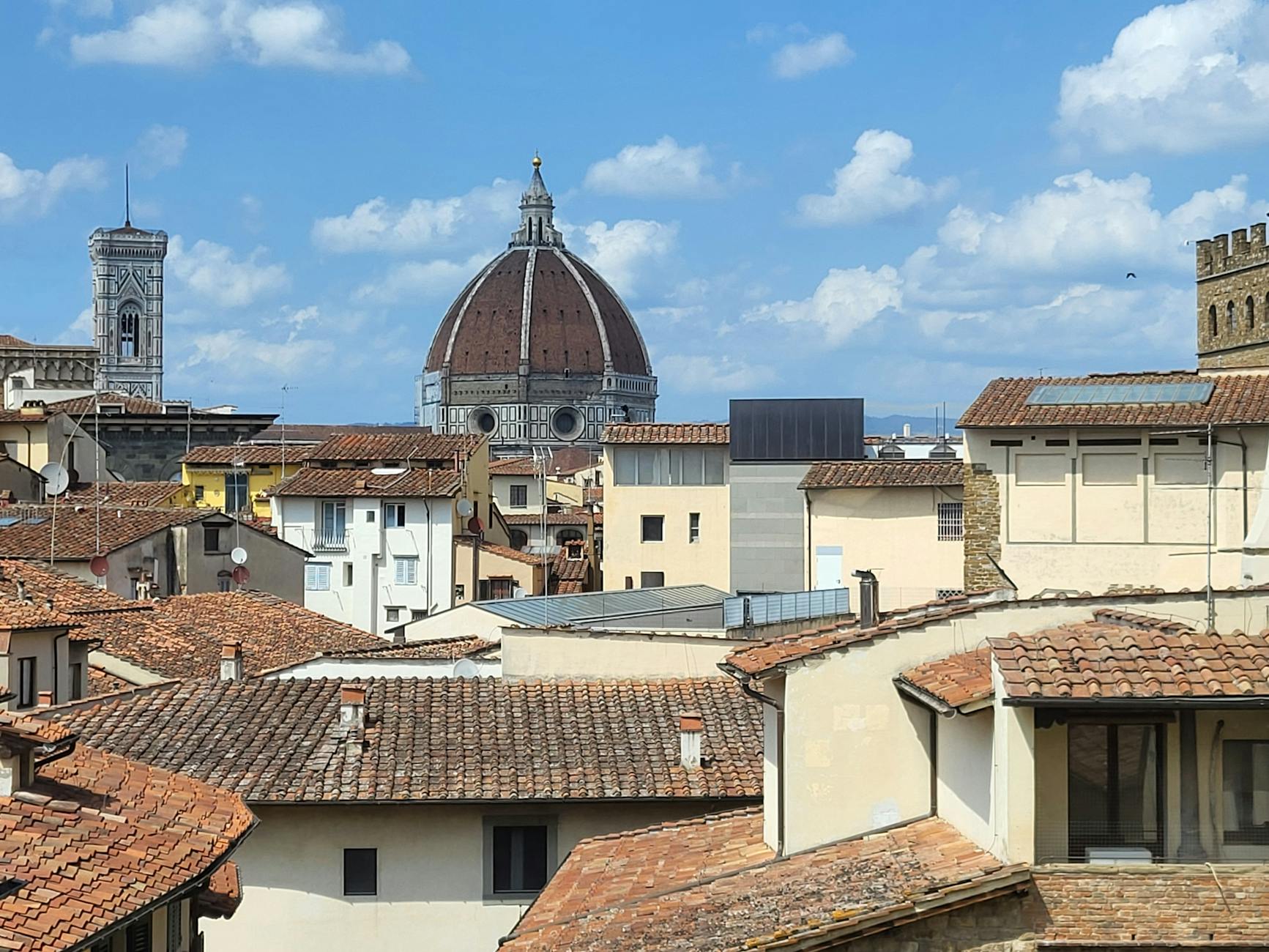
Why is Bologna so expensive for students in 2026?
Bologna is the second most expensive Italian city for student rooms after Milan. BusinessOnline.it reported in August 2025 that the average single room (stanza singola — a private room) in Bologna runs €632/month, against Milan's €732/month. That same source flagged a brutal trend: single-room rent grew +70% in Bologna between 2021 and 2025, the highest jump among major university cities — ahead of Florence (+59%), Padua (+61%), Turin (+56%), Rome (+47%) and Milan (+44%).
The pressure is structural. BusinessOnline.it counted over 68,000 enrolled students at the University of Bologna as of December 2025, with purpose-built private student beds passing 2,200 units — more than the public supply. When demand outruns beds, prices climb. That's exactly why choosing your quartiere (neighborhood district) matters more here than in most Italian cities. To sanity-check any offer you get, cross-read our guide on whether you're paying a fair rent in Italy.
Which Bologna neighborhood has the cheapest student rent?

📷 Mihai Vlasceanu / Pexels
Savena is the cheapest zone inside the city limits. According to HousingAnywhere's Bologna Neighbourhood Guide (updated June 2026), a private room in Savena averages €425/month — roughly €175 less than the Centro Storico (historic center). It sits 15–20 minutes from the University of Bologna by bus.
The underlying land value backs the price up: the Toscana-Savena area carries the lowest rental index in the city at €14.60 per square meter, versus €19.18 per square meter in the center, per Immobiliare.it data reported by BolognaToday. That gap is why a room here can undercut the center by a third.
Savena is residential and quieter than the university core. You trade a few minutes of commute for real monthly savings. If you're pairing up to split a two-bedroom, this is one of the strongest value zones in the whole city — worth flagging when you compare notes with a potential flatmate.
Is Bolognina (Navile) worth it for students?
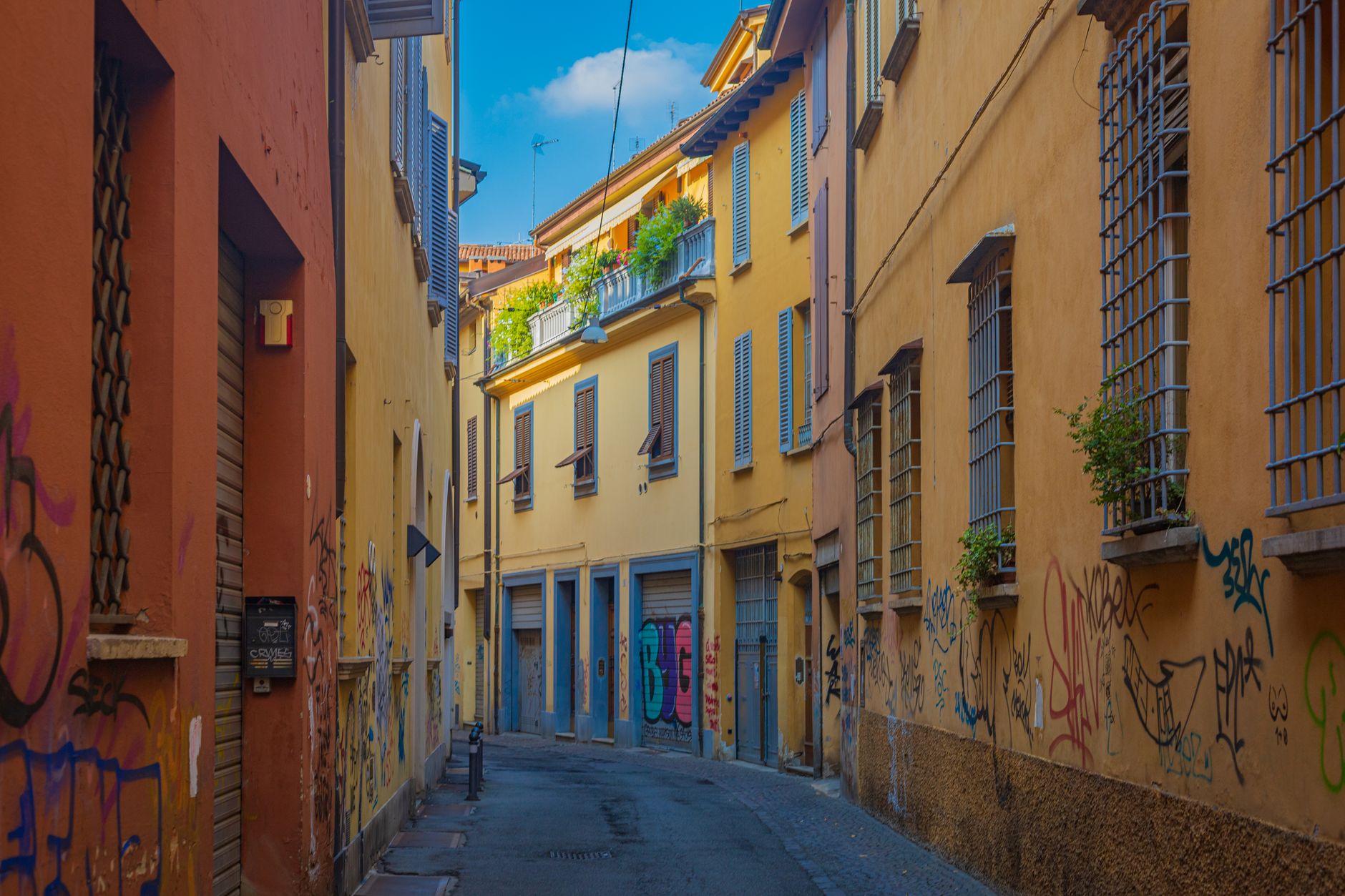
📷 KITSUN YUEN / Pexels
Bolognina, inside the Navile quartiere, is the second cheapest zone and arguably the best-connected. HousingAnywhere's June 2026 guide puts a private room here at €450/month, against roughly €600 in the Centro Storico. It sits just north of Bologna Centrale station, threaded by dozens of bus lines, and lands you 10–15 minutes from the main campuses.
There's a transit upgrade in progress. According to BolognaToday and trambologna.it, tram Line 1 (Linea Rossa) had its rail-laying completed from Borgo Panigale through the center to Ponte Matteotti by late June 2026, on a route that runs through Bolognina. Honest caveat: as of July 2026 the line is still under commissioning, with no confirmed opening date — so treat it as a future perk, not a current one.
Bolognina is one of the zones BusinessOnline.it described as undergoing "studentification" — meaning demand is rising fast. Move early if you want the €450 rooms rather than what's left in September.
San Vitale and Saragozza: close to campus, still doable?
San Vitale is the Quartiere Universitario — the university quarter around Via Zamboni and Irnerio, under a 5-minute walk to the faculties. HousingAnywhere's June 2026 guide lists rooms here at €430/month, which is strikingly low for the location. Treat that figure with caution: it may reflect smaller rooms or older data, and this is the most competitive market in the city. Idealista's May 2025 guide noted that listings here vanish within 24–48 hours in July and August.
Saragozza (Costa Saragozza) is the calmer alternative. HousingAnywhere puts a private room at €550/month, about 10 minutes to the center by bus or bike, with good green spaces and a residential feel. It's more expensive than Savena or Bolognina, but you're buying proximity and quiet.
One demand warning: HousingAnywhere reports that the Centro Storico, San Vitale, Santo Stefano and Saragozza together absorb 63.6% of all rental demand in Bologna. High demand means fast turnover and less negotiating room.
What about San Donato for engineering and science students?
San Donato is the practical pick for anyone studying at the science and engineering faculties. HousingAnywhere's June 2026 guide prices a private room at €550/month, with the zone sitting 10–15 minutes from the University of Bologna via multiple city bus lines and cycling routes, near Parco San Donato.
It's popular with STEM students specifically, which shapes the flatmate pool and the rhythm of the area. For anyone thinking further ahead, San Donato is also the most affordable zone to buy: HousingAnywhere lists a sales index of €2,865–3,000 per square meter, the lowest in the city.
Like Bolognina, San Donato was named by BusinessOnline.it as a "studentification" hotspot — so the €550 rooms are in demand and go quickly. If you land a good flatshare here, our 7 golden rules for happy roommates will help you keep it drama-free through exam season.
Is public ER.GO housing cheaper than private rooms?
Yes — dramatically, if you qualify. ER.GO is the Emilia-Romagna regional student housing authority. Per Giovazoom / ER.GO tariff data for the 2025–26 academic year, Bologna holds 1,800+ of the region's 4,117 beds, with monthly rents running roughly €319 for a single room to €418 for a double or shared space — utilities typically included. Treat these figures as indicative; they come from official tariff snippets rather than a directly fetched PDF.
That's less than a private room in every neighborhood above. The catch is eligibility: ER.GO housing is income-tested and requires the ISEE universitario (a means-test certificate for student benefits). Beds are limited and competitive.
If your family income clears the threshold, applying to the ER.GO bando (public call) should be your first move — it's the single biggest lever on your housing budget. If your ISEE is too high, the private market in Savena or Bolognina is your realistic floor. Either way, check whether you also qualify for an out-of-town student grant.
What to know before you sign a Bologna student contract
Use the contratto per studenti universitari (university student contract). According to Studenti.it's 2026 guide and Flash Giovani Bologna, it runs 6–36 months with auto-renewal, needs 3 months' written notice to exit, and requires you to be enrolled and resident in a different municipality. Crucially: an unregistered contract is legally null, and registration is mandatory within 30 days of signing.
Bologna is classified as a comune ad alta tensione abitativa (high housing-demand municipality), which unlocks the cedolare secca — a landlord flat-tax regime. Per Flash Giovani Bologna and Studenti.it, student and canone concordato (regulated-rent) contracts get a 10% flat rate versus the standard 21%, with the local territorial agreement in force since April 1, 2024. It eliminates registration and stamp duty, which gives landlords a real reason to say yes to a proper registered contract.
There's money back in it too. The University of Bologna's official page on registering your rental contract states families of out-of-town students can deduct 19% of annual rent, capped at €2,633 of expense — a maximum ~€500 IRPEF refund — provided payments are traceable and the student studies at least 100 km from home. That alone is a reason to insist on a registered contract and bank transfers, never cash.
How much is a student room in Bologna in 2026?
Budget €425–€550/month for the reasonable outer zones (Savena, Bolognina, San Donato, Saragozza) and €600–€792 for the Centro Storico, per HousingAnywhere's June 2026 guide. BolognaToday's 2026 figure for the citywide average single room is around €599/month.
Which Bologna neighborhood is best value for students?
Savena (€425/month) and Bolognina/Navile (€450/month) are the cheapest zones within city limits per HousingAnywhere's June 2026 data, both 10–20 minutes from campus by bus. Bolognina adds the best transit connections.
Do I have to register my rental contract?
Yes. Per Studenti.it's 2026 guide, an unregistered contract is legally null in Italy, and registration is mandatory within 30 days of signing. Registration also unlocks the family tax deduction and protects you as a tenant.
What is the caparra (security deposit) in Bologna?
The caparra is your security deposit. Our fact sources didn't include an official Bologna-specific figure, so we won't quote one — common market practice in Italy is a few months' rent, but always confirm the exact amount in the written contract before you pay anything.
How do I actually find a room in these zones?
Start your search early — Idealista noted the best rooms disappear in 24–48 hours during July and August. Search by quartiere rather than "Bologna" broadly, and vet any flatshare carefully; our guide on roommate red flags to spot before you sign covers the warning signs. You can also browse and message verified rooms and flatmates on Coinquilino (full disclosure: Coinquilino is our app, and one of the leading free housing platforms in Italy).
Pick your zone by the math, not the postcode romance. A €425 room in Savena and a €792 room in the center are separated by fifteen minutes on a bus — and about €370 a month you could spend on literally anything else.
---
This article was produced with the help of AI tools and reviewed by the Coinquilino editorial team.