Why does Naples stay cheap when your rent doesn't?
The food is cheap. The room is the part that hurts. Idealista News reported in September 2024 that a single room for a student in Naples averaged €411 a month, up 5.5% year-on-year from €390, with top-end rooms passing €600. Over a longer window the picture is worse: Requadro reported in March 2026, citing Idealista data, that Naples rents rose 35.5% in five years while housing sale prices rose 14.9%.
So the budget line you can actually control is food. And you are not alone in trying: Metropolisweb reported in March 2026 that Federico II counts 72,952 enrolled students across roughly 180 degree programmes, with 21,752 new enrollees in 2025/2026, slightly up from 21,656 the year before.
That density is why the streets around the humanities campuses are wall-to-wall with counters selling things that cost less than a coffee in Milan. Volume keeps prices honest. If you want the rent side of the equation handled too, start with our student cost of living breakdown for Italy.
How much is a meal at the Federico II canteen?

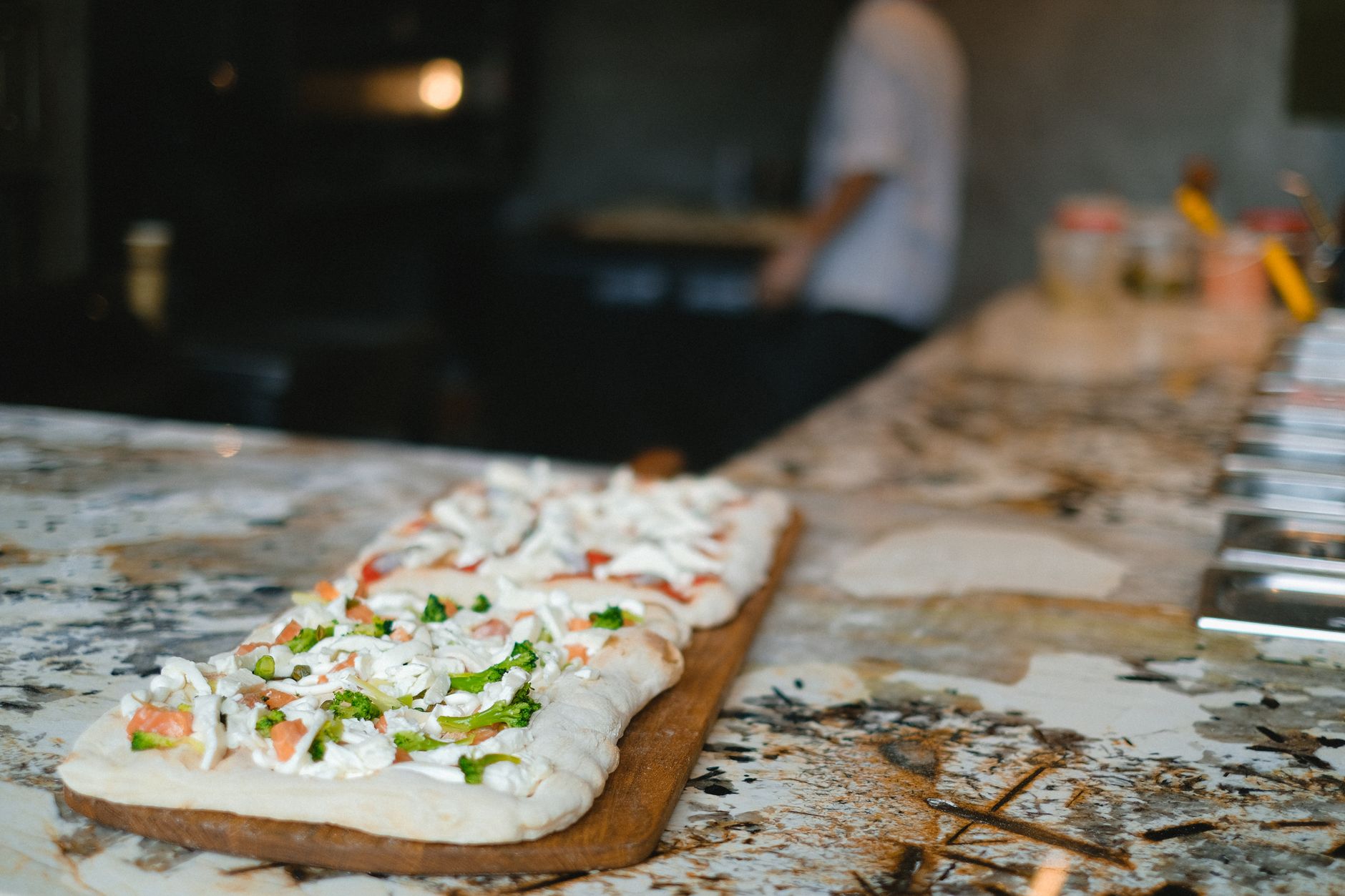
📷 Marco Cassé / Pexels
The mensa (student canteen) is run by ADISU Campania, the regional student-welfare agency, not by the university itself. According to ADISU Campania's official catering page, a traditional meal is priced by income category: €0.00 for exempt students, €2.60 for category 1, €3.60 for category 2, and €4.40 for category 3.
Which bracket you land in depends on the income documentation you file with ADISU. Non-EU and EU students file the equivalent paperwork through the same channel; you will need your codice fiscale (the Italian tax code, the ID number every bureaucratic step here depends on) before anything else works.
A "traditional meal" in this system is a full plate sequence, not a snack. At €2.60 or €3.60 it is mathematically unbeatable in Naples, and no street counter competes on calories per euro. The trade-off is fixed hours, queues at peak, and a location that may not match your faculty. Most students use the canteen as a weekday base and street food for everything outside those hours.
Where do Federico II students actually eat between lectures?

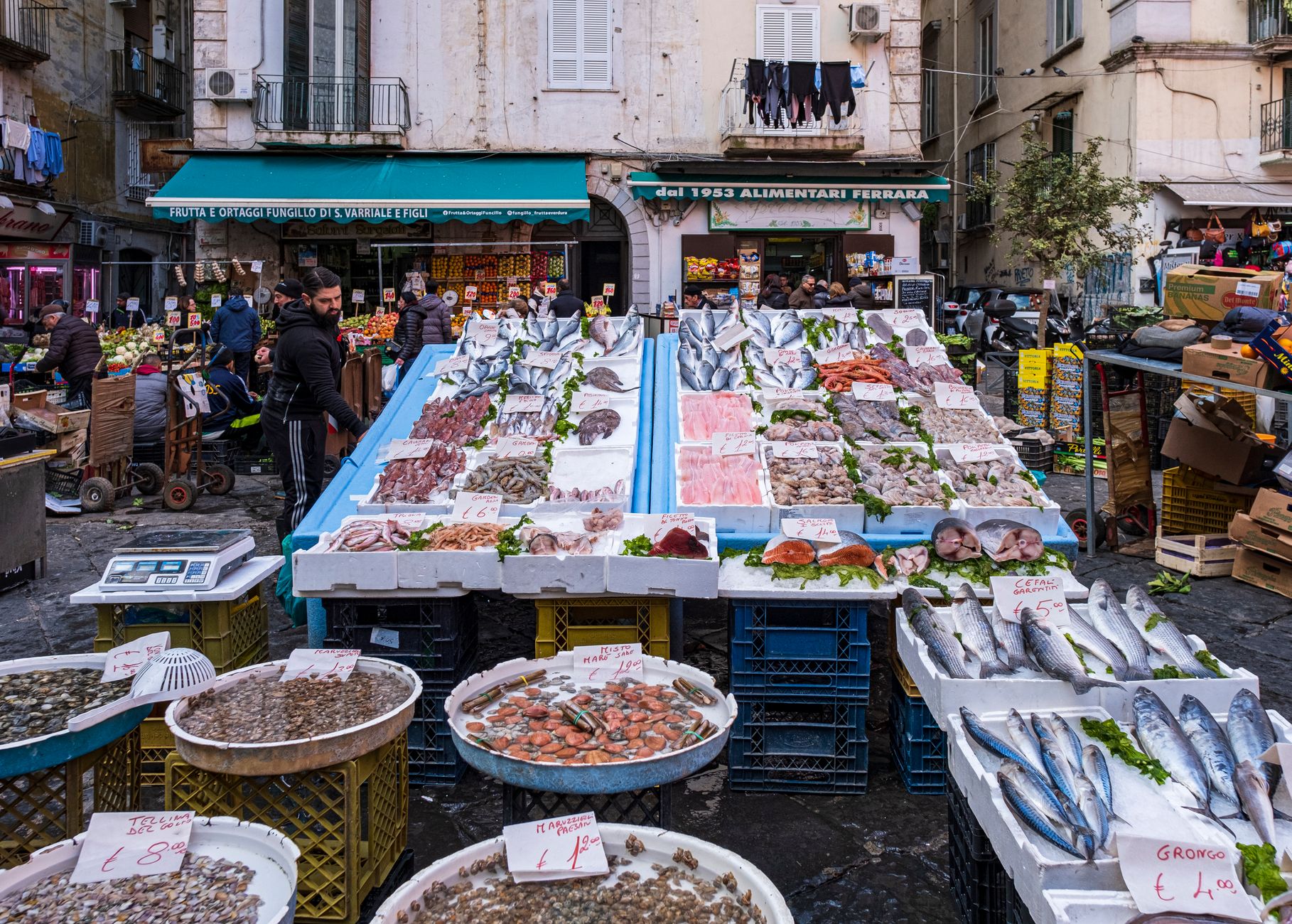
📷 Max Fischer / Pexels
The centre of gravity is Via Mezzocannone and the streets branching off it, which is where Federico II's humanities buildings and L'Orientale sit almost on top of each other. This is the densest cheap-food corridor in the city precisely because thousands of students empty out of lectures at the same hour.
The best-known name on that strip is Tandem, the ragù specialist. According to Sluurpy's listing and Tandem's own site, it has locations at Via Giovanni Paladino 51 and a takeaway at Via Mezzocannone 75, with typical spend of €10–20 per person.
That is a splurge by Naples student standards, so treat it as the once-a-week meal rather than the daily one. The thing to order is the cuzzetiello: the heel of a bread loaf hollowed out and filled with ragù, engineered to be eaten standing up. Ask for ragù alla genovese if you want the Neapolitan onion-based version rather than the tomato one — it is a completely different dish from Bolognese ragù, and it is a Naples signature.
What is the cheapest real meal in Naples?
Pizza a portafoglio — a full pizza folded into quarters and eaten by hand, in the street. According to Luciano Pignataro's January 2026 article, Antica Pizzeria Port'Alba 1738 at Via Port'Alba 18 is cited as the birthplace of the format, and the folded pizza averages around €2.00.
The second contender is pizza fritta, deep-fried dough stuffed with ricotta and cicoli or with tomato and mozzarella. At Antica Pizza Fritta da Zia Esterina Sorbillo, Piazza Trieste e Trento 53, the counter is open 11:00–22:00 daily and typical spend is €1–10 per person according to Sorbillo's official page and Sluurpy's listing.
Both are eaten standing. Neither needs a reservation, a table, or Italian beyond pointing. For a student on a €411-a-month room, this is the category that makes the month work: a filling lunch for the price of a bus ticket, with no service charge attached because there is no service.
Is the Pignasecca market worth the walk?
Yes, and it is close. According to Movery, the Mercato della Pignasecca runs along Via Pignasecca in the centro storico, near Montesanto on Metro Line 2 and Toledo and Dante on Metro Line 1, and it is open daily.
It works two ways for a student. First, raw ingredients: this is where you buy vegetables, fish and cheese at market prices instead of supermarket ones, which matters if you cook at home with flatmates. Second, prepared food.
The anchor is Fiorenzano, the historic tripperia and fry shop at Via Pignasecca 14, open since 1897, with typical spend of €1–10 per person for a fried cuoppo according to Sluurpy. A cuoppo is a paper cone of mixed fried things — crocché, panzarotti, zeppoline, whatever is in the fryer — and it is the most efficient walking lunch in the city.
Go in the morning when the market is fully awake. Bring cash. Many of the smallest stalls still prefer it, and a card refusal at a counter with a queue behind you is an avoidable social event.
What does breakfast cost, and how do you not overpay?
Breakfast in Naples is a coffee standing at the bar plus a pastry, and the pastry is the sfogliatella: riccia is the crisp layered shell, frolla is the softer shortcrust version. At Antico Forno delle Sfogliatelle Calde Attanasio, Vico Ferrovia 1-2-3-4 near Napoli Centrale, baking since 1930, sfogliatelle are priced roughly €1.50–€2.00 per piece according to Sirein's December 2024 article, updated in 2026.
The rule that saves foreigners the most money has nothing to do with which bar you pick: drink at the counter (al banco), not at a table. Table service in Italy is a different, higher price list, and sitting down at a piazza table in a tourist zone converts a cheap breakfast into an expensive one. The counter price is the local price.
Second rule: order in the local sequence — coffee first, pay at the till before or after depending on the bar's system, and watch what the person ahead of you does. Third rule: a bar that is full of people in work clothes at 08:00 is cheaper and better than an empty one with an English menu outside.
How do you build a week around this without eating fried food daily?
The realistic student pattern in Naples is a rotation, not a single strategy. Canteen meals on lecture days, because at ADISU's €2.60–€4.40 tiers nothing else competes. Market shopping at Pignasecca once a week for the meals you cook with flatmates. Street counters for the days the timetable breaks.
Cooking is where the savings compound, and cooking depends on the kitchen you share — which brings the whole thing back to housing. A room in a flat with a working kitchen and flatmates who cook is usually worth more over a year than the small monthly rent gap between two otherwise similar listings.
If you are still searching, Coinquilino (coinquilino.app), a free app for finding rooms and roommates in Italy, lets you see who you would actually be sharing that kitchen with before you commit — full disclosure: Coinquilino is our app. Before signing anything, read up on what fair rent looks like across Italy in 2026 so a Naples room at the top of the range doesn't get sold to you as normal.
Is the ADISU canteen open to international and Erasmus students?
Yes — ADISU Campania's canteen service is the regional student-welfare service, and the price you pay is set by income category rather than nationality. According to ADISU's official rate table, the traditional meal runs €0.00 for exempt students up to €4.40 for category 3. You will need your codice fiscale and your student enrolment sorted first, plus a permesso di soggiorno (residence permit) if you are a non-EU student.
Are ADISU dorms cheaper than renting a room in Naples?
Substantially, if you get a place. According to ADISU Campania's official 2025/2026 rate table, residence hall fees run €173 to €278 a month depending on room type. Compare that with the €411 monthly average Idealista News reported for a student single room in Naples in September 2024. The catch is availability and the ranking process — most students never get a bed and end up on the private market anyway.
How much should I budget for food per week as a student in Naples?
The honest answer is that it depends entirely on your canteen category and how often you cook, and no single credible published figure covers it. What you can anchor on: ADISU's published meal tiers of €2.60, €3.60 or €4.40, a pizza a portafoglio averaging around €2.00 according to Luciano Pignataro's January 2026 article, and sfogliatelle at roughly €1.50–€2.00 per piece per Sirein. Build your own weekly number from those, not from a blog's guess.
What Italian words do I need to order without embarrassment?
Six carry most of the weight. Cuoppo (cone of mixed fried food), sfogliatella riccia or frolla (crisp layered or soft shortcrust pastry), pizza a portafoglio (folded street pizza), cuzzetiello (stuffed bread-end sandwich), friggitoria (fry shop), and al banco (at the counter). Add "per asporto" for takeaway. Nobody will judge your accent — Naples is genuinely forgiving about this, more so than most Italian cities.
Does eating cheap in Naples mean eating badly?
No, and this is the part that surprises arrivals from northern Europe. The cheap food here is the traditional food: fried dough, folded pizza, market vegetables, ragù. The expensive restaurants in the tourist strip are often serving worse versions of what a €2 counter does properly. Follow the queues of people who clearly live nearby, and the price and quality curves point the same direction.
Where do I start if I've just arrived for Erasmus?
Sort your codice fiscale, sort the room, then eat. Rooms move faster than paperwork in Naples, so lock in housing early and be aware of the deposit (caparra) and contract type before you transfer money — a contratto transitorio, the short-term contract type used for students, has different rules from a standard lease. Our Erasmus guide to Italian culture and daily life covers the rest of the landing checklist.
---
This article was produced with the help of AI tools and reviewed by the Coinquilino editorial team.